How Many Jobs Should I Apply to Per Week? (2026)
Apply to 10-15 jobs per week as your baseline, 20-30 if unemployed. Your exact target depends on interview rate, situation, and application quality.


Audio and video are AI narrations of this article.
How Many Jobs Should I Apply to Per Week? (2026)
Narrated version · 7 min
Updated: June 8, 2026
The short answer to how many jobs you should apply for in a week: aim for 10–15 well-matched jobs per week if you're employed or doing a casual search. Go for 20–30 per week if you're unemployed or actively searching in a competitive market.
That number alone won't help you much unless you understand why, because the right weekly target is really a function of three things: your current employment situation, your personal interview rate, and whether your applications are actually good. We've worked with over 1.1 million job seekers at AIApply, and the candidates who get stuck aren't usually applying to too few jobs or too many. They're applying to the wrong jobs with materials that don't match, without any system for tracking or adjusting.
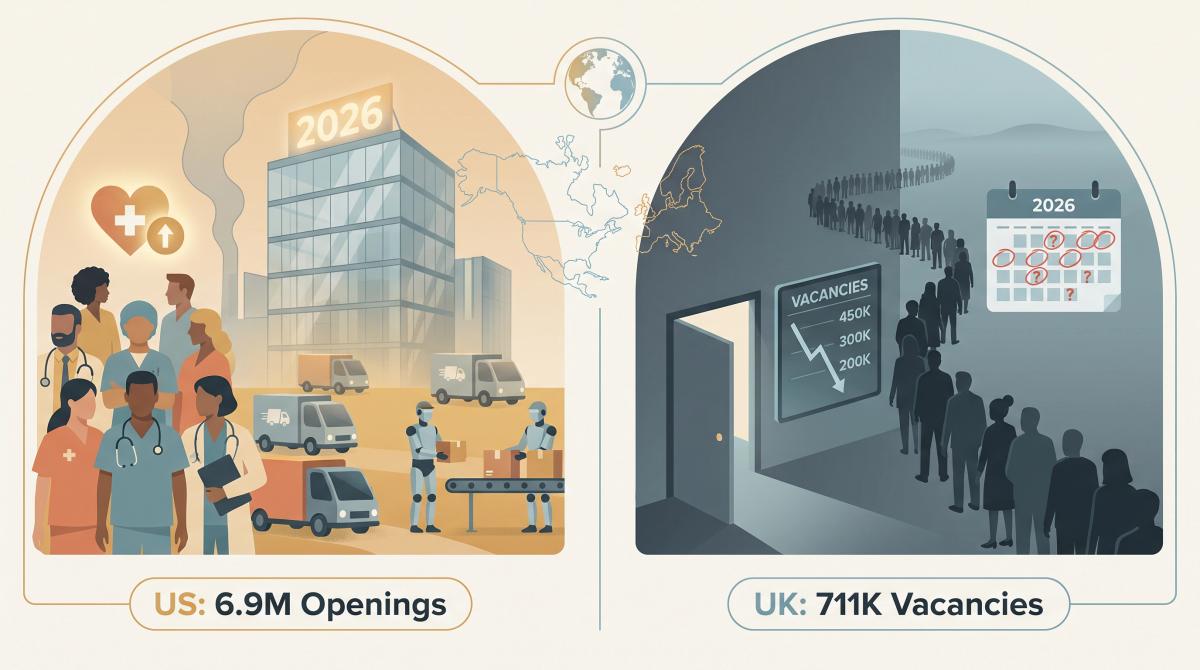
The 2026 job market adds some pressure to this. The Bureau of Labor Statistics' April 2026 employment report showed 115,000 new nonfarm payroll jobs in the month and a 4.3% unemployment rate, while the March 2026 JOLTS release reported 6.9 million job openings alongside 5.6 million hires and 5.4 million separations. That sounds healthy until you realize that openings in professional and business services dropped by 318,000, while healthcare and social assistance added 87,000. What's happening at the national level may have nothing to do with what's happening in your specific sector.
The UK picture is tighter. The Office for National Statistics reported vacancies fell to 711,000 in January through March 2026, the lowest level since early 2021, with 2.5 unemployed people competing for every vacancy.
So yes, you need volume. But low-quality volume is mostly noise. Working out the right number requires looking at your specific situation.
How Many Jobs to Apply Per Week by Situation
Start here. Find your situation and use it as your baseline.
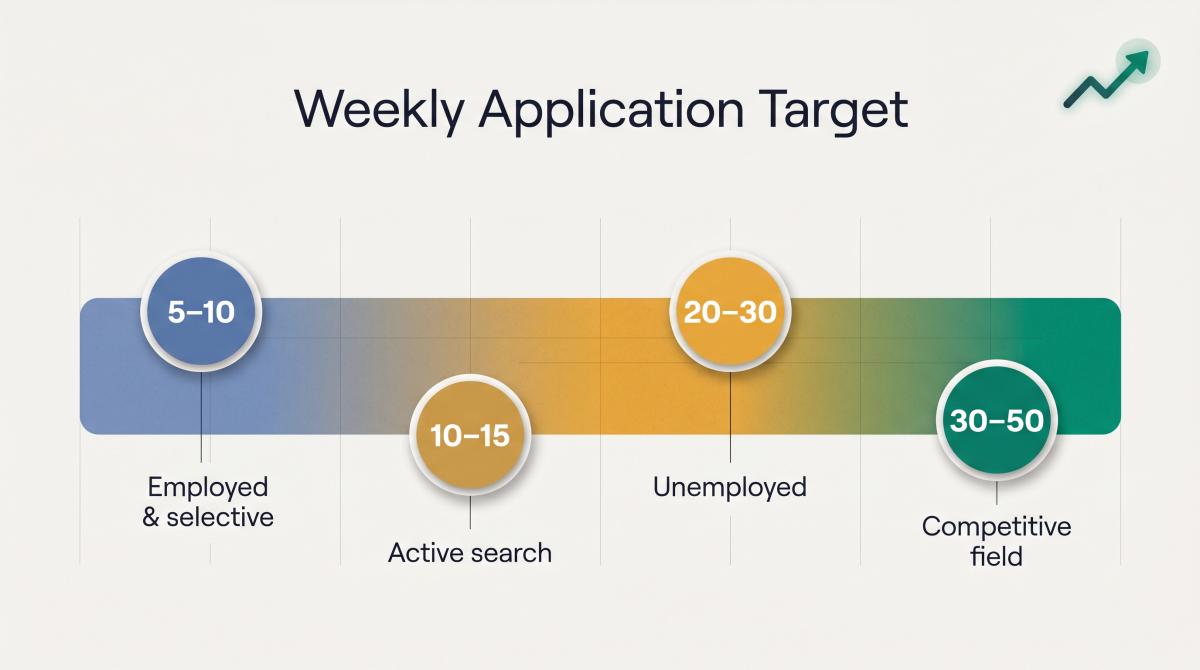
| Your Situation | Weekly Target | What That Looks Like |
|---|---|---|
| Employed, selective search | 5–10 | Mostly high-fit roles, strong tailoring, networking-heavy |
| Employed, seriously want to move | 10–15 | The best default for most people |
| Unemployed or recently laid off | 20–30 | Treat the search like a job, but keep quality controls |
| Highly competitive field, remote roles, career pivot | 30–50 | Only with tracking and quality controls in place |
| Already getting 2+ interviews per week | Reduce volume | Shift time into interview prep and follow-ups |
| Zero interviews after 30–50 applications | Don't add more | Fix targeting, resume fit, keywords, and source mix first |
Research updated December 2025 recommends 2–3 applications per day, or 10–15 per week, while also noting candidates should modify their resume and cover letter for each role.
That 10–15 range remains the most sensible default, but only if those applications are real. If you're sending the same resume to every posting without reading the description, the better number might be zero until you fix the materials.
What Counts as a Real Job Application?
Not every click is an application. A real application means:
- You meet most of the required qualifications for the role
- The title, seniority level, salary range, and location all work for you
- Your resume clearly reflects the skills the job actually asks for (run it through an AI resume scanner if you're not sure whether the right keywords are coming through)
- You included a cover letter when it would genuinely help
- You logged the application and have a follow-up date set
- You would actually accept an interview if one came
A one-click "Easy Apply" to a job you barely skimmed isn't the same unit as a tailored submission for a role you're genuinely excited about. They shouldn't be counted the same way.

The rule: count quality applications, not clicks.
When your numbers feel low, it's often because your definition of "applying" is too generous. Tighten the definition and your conversion rate gets clearer.
How to Calculate Your Weekly Job Application Target
To calculate your personal weekly job application target, divide the number of interviews you want per week by your current interview rate. The formula uses two numbers you either have or can estimate.
Weekly applications needed = target interviews per week ÷ your interview rate
Your interview rate is calculated as:
interviews ÷ total applications submitted
An example: You've submitted 50 applications and received 3 interviews.
3 ÷ 50 = 6% interview rate
Now apply the formula. If you want 1 interview per week:
1 ÷ 0.06 = about 17 applications per week
If you want 2 interviews per week:
2 ÷ 0.06 = about 34 applications per week
This is why the "right number" varies so dramatically between people. Someone with a 10% interview rate can apply to 10 jobs and get roughly one interview that week. Someone with a 2% rate may need 50 applications to see the same result.
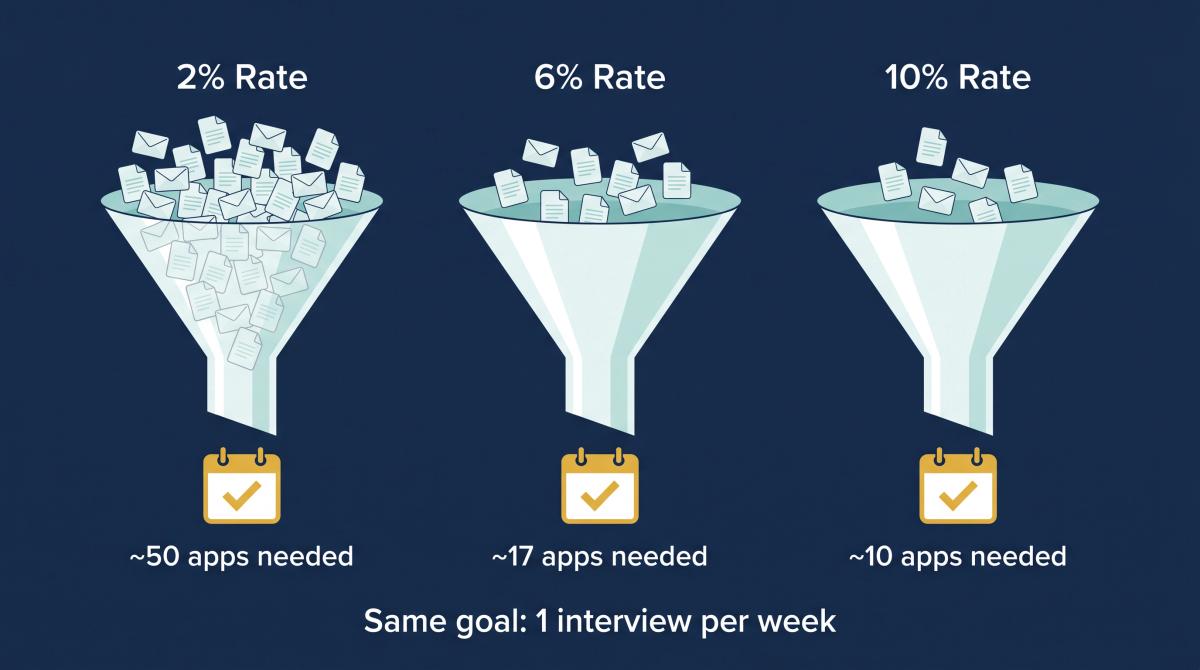
If you don't have data yet, start at 10–15, track everything for two weeks, then calculate your rate. Your first real number is just an estimate until you have actual data behind it.
What Is a Normal Job Application Interview Rate?
Don't panic if your personal rate feels low. Hiring funnels are narrow by design.
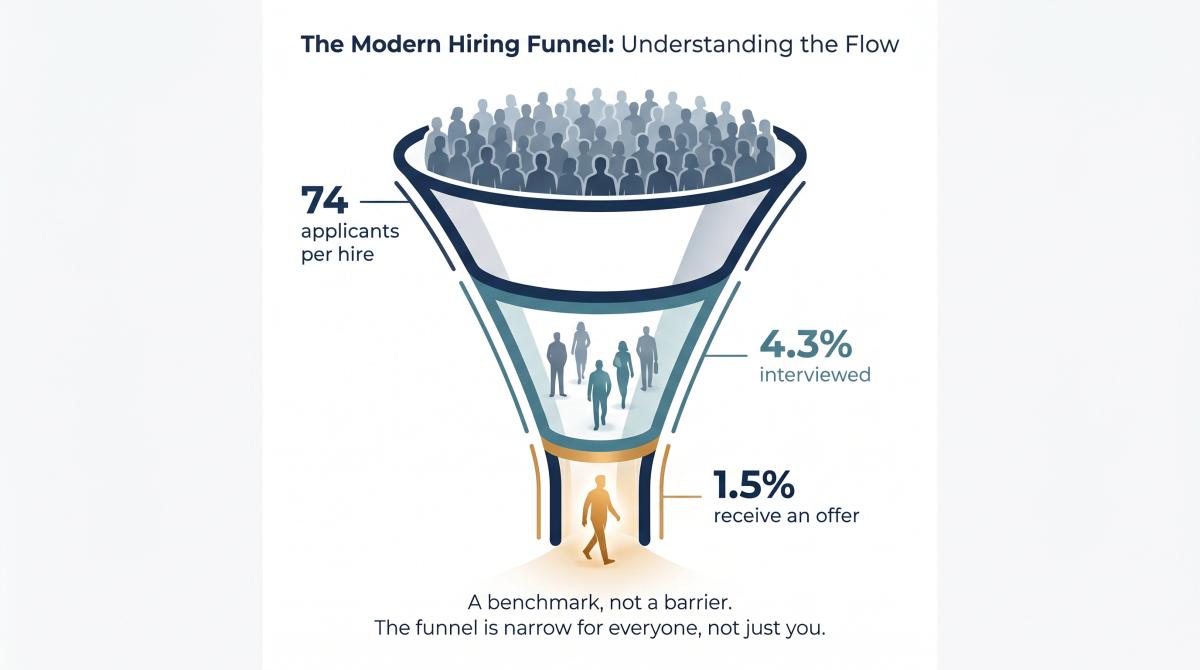
A 2025 recruitment benchmarks report shows just how tight the funnel is:
| Market | Applicants Per Hire | % Candidates Interviewed | % Receiving Offers | Days to Hire |
|---|---|---|---|---|
| United States | 74 | 4.3% | 1.5% | 35 |
| United Kingdom | 72 | 4.3% | 1.1% | 40 |
That doesn't mean your personal odds are exactly 4.3%. It means the system is crowded. If your cold online applications are converting at 3–5%, you're not broken.
A 2025 annual job search trends report, based on data from 1.7 million applications, 1 million job postings, 243,000 resumes, and a survey of over 1,000 job seekers, found that the median job seeker submitted about 16 applications per week. Higher-volume searchers submitted around 40 per week at the 75th percentile and nearly 85 per week at the 90th percentile.
That context is useful but don't copy the 90th percentile unless you have a system to keep quality high. Submitting 85 applications a week with untailored materials mostly ensures you get ignored at scale.
How Many Jobs to Apply to Per Week by Employment Status

If You're Employed and Casually Job Searching
Aim for 5–15 applications per week, depending on urgency.
Your biggest advantage is patience. You don't need to flood the market. You need to be consistent and selective, because an offer you'd actually accept is worth more than 20 interviews for jobs you're lukewarm about.
A practical split:
- 5–8 high-fit applications
- 3–7 good-but-not-perfect applications
- 5–10 networking messages
- 1 follow-up session per week
Don't spend evenings rage-applying to everything that opens. That's how you end up interviewing for jobs you'd never take. A better rhythm: build a shortlist on Sunday, apply Monday through Thursday, and reserve Friday for follow-ups and reaching out to people in your target companies. When you do apply, use AIApply's Cover Letter Generator to make sure each application has a genuinely tailored letter (generic letters are easy to spot and easy to ignore).
If You're Unemployed or Recently Laid Off
Aim for 20–30 quality applications per week.
That usually breaks down as:
- 8–12 high-fit, deeply tailored applications
- 10–18 solid-fit applications
- 10–15 networking actions
- 2 follow-up blocks
- 2 interview-prep sessions
Research suggests unemployed job seekers can treat the search like a full-time job, dedicating 30–40 hours per week to searching, applying, networking, tracking applications, and following up. But don't spend 40 hours filling out forms. A more useful breakdown of that time:
| Activity | Time Share |
|---|---|
| Finding and applying to matched roles | 40% |
| Tailoring resume and cover letter | 20% |
| Networking and referrals | 20% |
| Follow-ups and tracking | 10% |
| Interview practice | 10% |
Start by building your base resume with AIApply's Resume Builder (ATS-optimized from the start), then use Auto Apply to maintain volume on solid-fit roles while keeping your best energy reserved for top opportunities.
Once interviews start coming in, reduce application volume slightly and shift more time into interview prep. A full pipeline is useless if you can't convert interviews into offers.
If You're a Recent Graduate Entering the Job Market
Aim for 15–25 applications per week.
Why more than the default? Entry-level roles often attract large applicant pools, and many new graduates look similar on paper. Your edge comes from the specifics: internships, projects, coursework that maps directly to the role, volunteer work, portfolio proof, and referrals.
Also: don't only apply to formal "graduate scheme" programs. Apply to assistant, coordinator, analyst, trainee, associate, junior, and operations roles where your actual skills match. Browse entry-level analyst roles and similar positions to get a sense of what employers are actually asking for at that level.
A strong graduate week looks like this:
- 10–15 entry-level roles
- 5–10 adjacent roles you could grow into
- 5 alumni or LinkedIn messages
- 1 career-services or recruiter conversation
- 1 resume review session (use an AI resume scanner to check ATS compatibility)
If You're Applying to Tech Roles
Aim for 20–40 applications per week for an active search, especially for remote roles, junior positions, or competitive software engineering roles.
A 2025 recruitment benchmarks report shows the tech funnel is particularly unforgiving: 110 applicants per hire, only 3.4% of candidates interviewed, 0.7% receiving offers, and 48 days to hire on average.
But tech candidates shouldn't only increase volume. They should increase proof. Every high-fit application for a technical role should include at least one of these:
- GitHub link or repository
- Portfolio of shipped work
- Measurable system impact (performance improvement, scale, uptime)
- Architecture example
- Quantified product metrics
- Clear tech stack alignment (review what skills software engineers are expected to demonstrate and make sure yours are visible on your resume)
Check out software engineer resume examples to see how top candidates present their proof points before you finalize your application materials.
For senior roles, 10–20 high-quality applications paired with direct recruiter outreach will almost always outperform 50 cold generic submissions.
Healthcare, Retail, Hospitality, and Manufacturing
Hiring patterns vary significantly by sector. 2025 industry benchmarks by sector:
| Industry | Applicants Per Hire | % Interviewed | Days to Hire |
|---|---|---|---|
| Healthcare | 40 | 5.3% | 41 |
| Retail | 65 | 5.3% | 25 |
| Manufacturing | 38 | 4.8% | 55 |
| Hospitality | 117 | 1.8% | 39 |
| Technology | 110 | 3.4% | 48 |
Practical weekly targets based on this data:
→ Healthcare: 10–20 per week, with strong credential and shift/location matching. Browse open registered nurse roles and similar healthcare positions to gauge what's actively hiring.
→ Retail: 15–30 per week, especially if you need speed (retail moves fast). Explore current retail manager listings to understand what the market looks like right now.
→ Hospitality: 20–40 per week, but focus on employers who are actively hiring right now. Check hospitality job listings for a real-time view of what's open.
→ Manufacturing: 10–20 per week, with skills, certifications, and shift availability made immediately obvious on your resume. See manufacturing engineer resume examples to understand how to surface certifications effectively.
→ Technology: 20–40 per week if actively searching; fewer if you're senior and leading with recruiter relationships.
2026 Job Market: How Many Applications You Actually Need
The US Job Market in 2026
The Bureau of Labor Statistics' April 2026 report showed job gains in health care, transportation and warehousing, and retail trade, while federal government employment and information sector employment continued trending down. The March 2026 JOLTS data confirmed 6.9 million openings, but professional and business services saw a sharp drop of 318,000 openings while healthcare added 87,000.
Don't use one national number to assess your own search. A healthcare candidate and a white-collar corporate candidate in 2026 are living in genuinely different markets. Know which market you're actually in.
How Many Jobs Should I Apply to Per Week in the UK?
UK job seekers should aim for 15–30 applications per week in 2026, given that vacancies have fallen to their lowest level since early 2021 and competition has increased.
The picture is tighter than in the US. The ONS Labour Market Overview for April 2026 put the unemployment rate at 4.9% for December 2025 through February 2026. Vacancies dropped to 711,000 in January through March 2026, their lowest since early 2021.
KPMG and REC's UK Report on Jobs, published May 11, 2026, with survey data collected April 9–24, reported permanent placements falling at a faster rate in April, total demand for workers continuing to decline, and candidate availability increasing.
The practical implication is clear: don't wait around after sending a handful of applications. Keep a steady, active pipeline, because in this market 15–30 a week is far more realistic than the 5–10 you might get away with when vacancies are plentiful.
Which Job Boards Have the Best Response Rates?
One of the most underrated variables in your weekly target is your channel mix. Not all job boards perform equally.
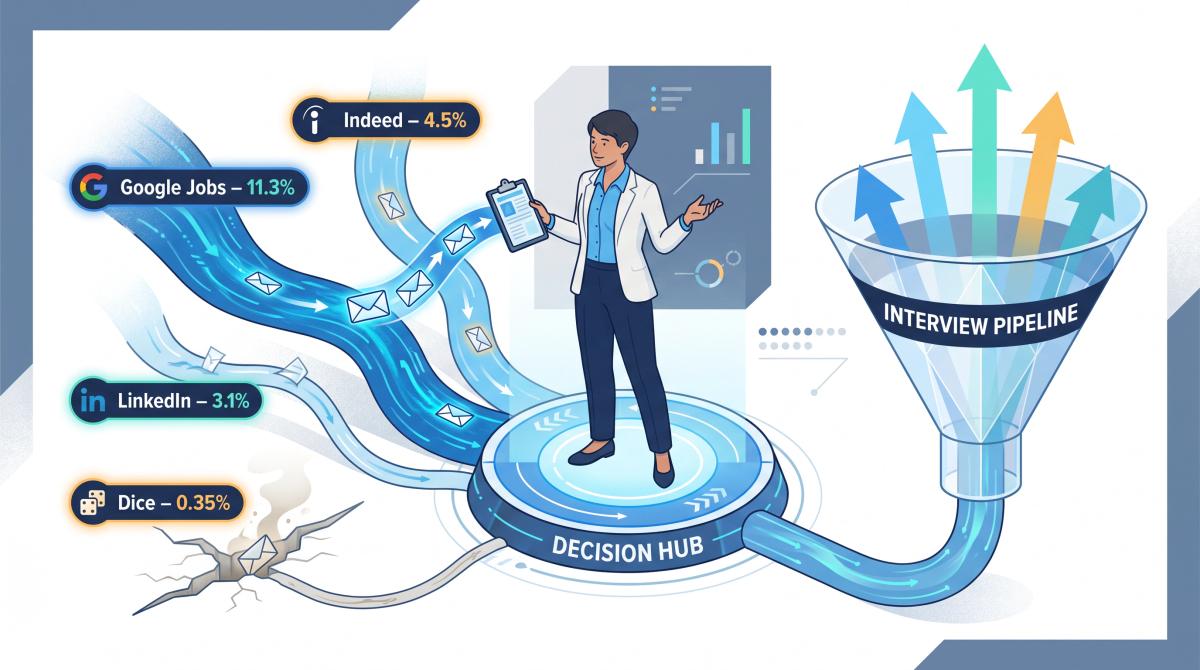
Huntr's 2025 Annual Job Search Trends Report analyzed 598,627 applications tracked by its users and found significant differences in interview-stage response rates by source. This is platform data from a single job-search tool rather than a neutral industry benchmark, but the spread is striking:
| Job Source | Response Rate |
|---|---|
| Google Jobs | 11.3% |
| GovernmentJobs | 8.7% |
| Wellfound | 6.0% |
| Glassdoor | 5.5% |
| Handshake | 5.1% |
| Indeed | 4.5% |
| 3.1% | |
| ZipRecruiter | 2.8% |
| Dice | 0.35% |
The lesson here isn't "never use LinkedIn" or "only use Google Jobs." The lesson is: track your own source performance. If LinkedIn is giving you 30 applications but zero responses, it shouldn't be your primary channel.
A strong weekly application mix should include:
- Broad job boards (Indeed, LinkedIn)
- Niche industry job boards
- Direct company career pages (these often outperform job boards)
- Recruiter outreach
- Referrals and alumni networks
- Direct hiring manager outreach
- AIApply's job board and Auto Apply workflow for matched roles
If one source gives you 30 applications and zero interviews after two weeks, stop treating it as your main channel.
The Weekly Job Application System That Actually Works
Having a target number is step one. Having a system is what actually moves the pipeline.
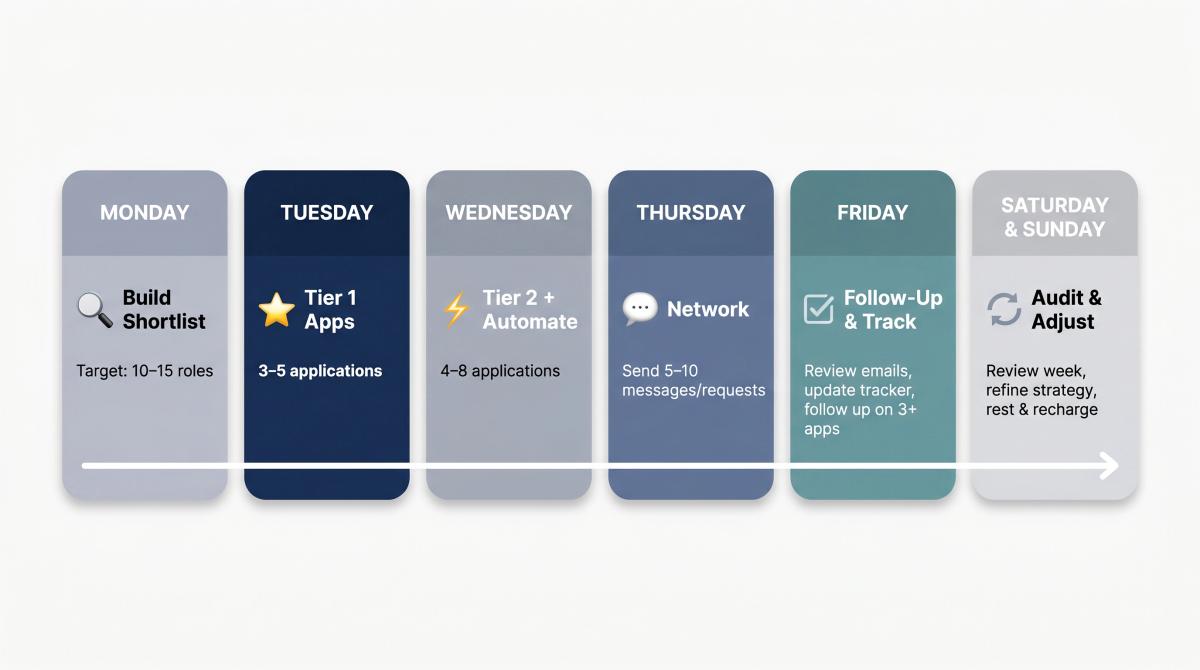
Monday: Build Your Shortlist
Start each week by finding 20–40 potential roles, then cut aggressively. You're not applying to all of them today. You're building a shortlist.
Keep a role only if:
- You meet most of the required qualifications
- The title and seniority level make sense for where you actually are
- Salary, location, and work setup work for your life
- The company appears to be actively hiring (check recent employee additions on LinkedIn)
- The posting isn't obviously stale (90+ days old on a role that's still live is a red flag)
- You can explain your fit in one sentence
Target: 10–15 strong roles shortlisted.
Tuesday: Send Your Best Applications (Tier 1)
These are your highest-value opportunities. Treat them accordingly.
For each Tier 1 role:
- Tailor the resume headline to mirror the job title
- Move your most relevant achievements to the top
- Match the most important keywords from the job description
- Write a specific cover letter using AIApply's Cover Letter Generator, not a generic one with the company name swapped
- Find one person at the company to message, even briefly
- Save the full job description
Target: 3–5 high-fit applications.
Wednesday: Apply to Solid-Fit Roles (Tier 2)
These are roles you qualify for and would genuinely consider, but they're not your top picks.
Target: 4–8 applications.
This is where automation earns its place. AIApply's Auto Apply feature scans matching roles and submits applications with a tailored resume and cover letter based on your preferences. For Tier 2 applications, using a tool like this lets you apply at meaningful scale while keeping your best energy reserved for Tier 1. Pair that with AIApply's Resume Scanner, which checks your materials against 50+ ATS systems and flags keyword gaps before you apply.
Thursday: Networking and Referrals
Send 5–10 messages. These don't have to be long.
What not to write: "Can you get me a job?"
What works:
Hi [Name], I'm applying for [role] at [Company] and I noticed your work in [specific area]. I'm trying to understand what the team values most in this kind of role. Would you be open to a quick question by email?
Keep it short. Make it easy to answer. One specific question beats a three-paragraph life story every time.
Friday: Follow-Ups and Tracking
Update your tracker. Log everything:
- Company and role title
- Date applied
- Job board or source
- Resume version used
- Cover letter used
- Contact person at the company
- Scheduled follow-up date
- Current status
- Outcome (when known)
Then send follow-ups for applications that are 7–10 business days old. A brief, professional email that adds a small piece of new value ("I noticed the company just launched X, which directly relates to how I approached Y") performs better than "just checking in."
Job searching without tracking is guessing with anxiety. The tracker turns your search into a feedback loop.
Weekend: Audit Your System
Look at last week's numbers:
- How many applications submitted?
- How many responses (any kind)?
- How many recruiter screens?
- How many first-round interviews?
- Which job boards performed best?
- Which resume version got more responses?
- Where did applications go silent?
Then adjust. Move time away from what's not working and double down on what is.
The 3-Tier Job Application Method Explained
Not every job deserves the same investment of your time. The 3-tier method lets you scale without sacrificing quality on the applications that matter most.
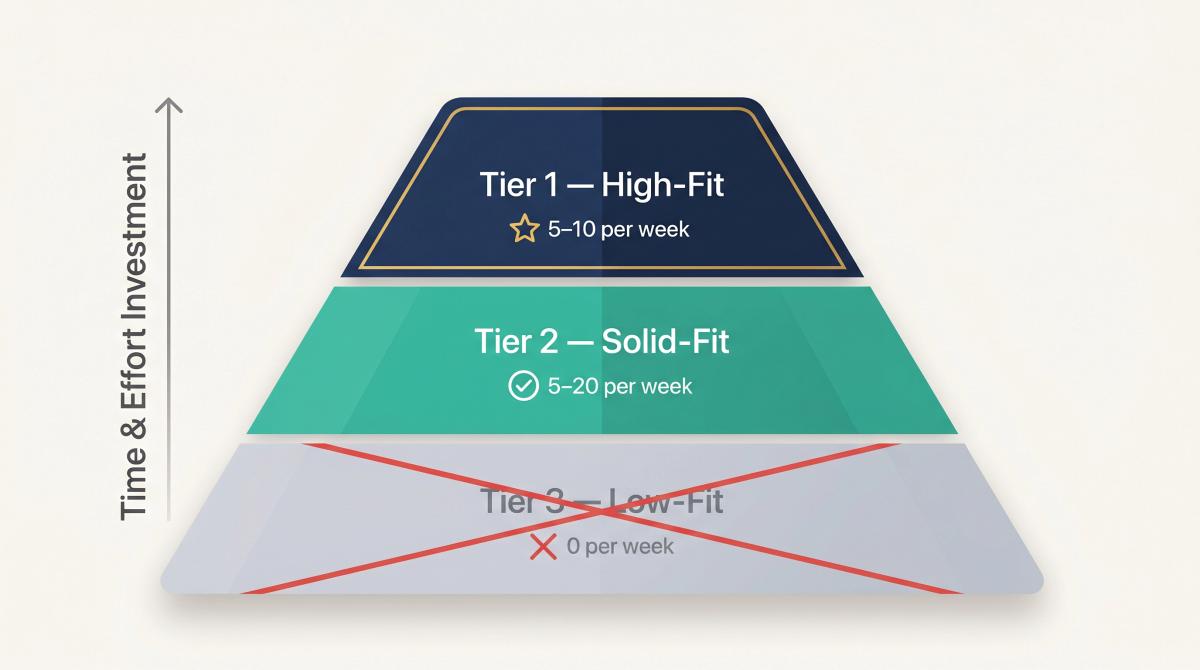
Tier 1: High-Fit Roles
These are roles where you're a strong match and genuinely want the job.
Weekly target: 5–10
The investment for each one:
- Deep resume tailoring (not just a swapped summary)
- A specific, role-focused cover letter
- Research into the team, the product, the competitive landscape
- One internal contact reached out to before or after applying
- Job description saved for interview prep
Tier 2: Solid-Fit Roles
You qualify, you'd consider it, but it's not your dream.
Weekly target: 5–20
The investment:
- Tailored resume keywords and summary
- Adjusted top bullets to match the role
- Reusable cover letter structure with a company-specific opening
- Full tracking
This is where AIApply's Resume Builder and Cover Letter Generator genuinely help. They let you generate well-tailored materials quickly, which makes applying to 10–15 Tier 2 roles in a session sustainable.
Tier 3: Low-Fit Roles
You're clearly underqualified, uninterested, or badly mismatched.
Weekly target: 0
Don't apply. Desperate applications feel productive while quietly pulling down your interview rate. If you're tracking conversion, Tier 3 applications show up as noise that makes your real results harder to read.
A side-by-side comparison of all three tiers:
| Tier 1 | Tier 2 | Tier 3 | |
|---|---|---|---|
| Weekly volume | 5–10 | 5–20 | 0 |
| Resume tailoring | Deep | Keywords + summary | Skip |
| Cover letter | Custom, specific | Template with adjustments | Skip |
| Company research | Yes | Light | Skip |
| Contact outreach | Yes | Optional | Skip |
| Track it? | Always | Always | N/A |
Are You Applying to Too Few or Too Many?
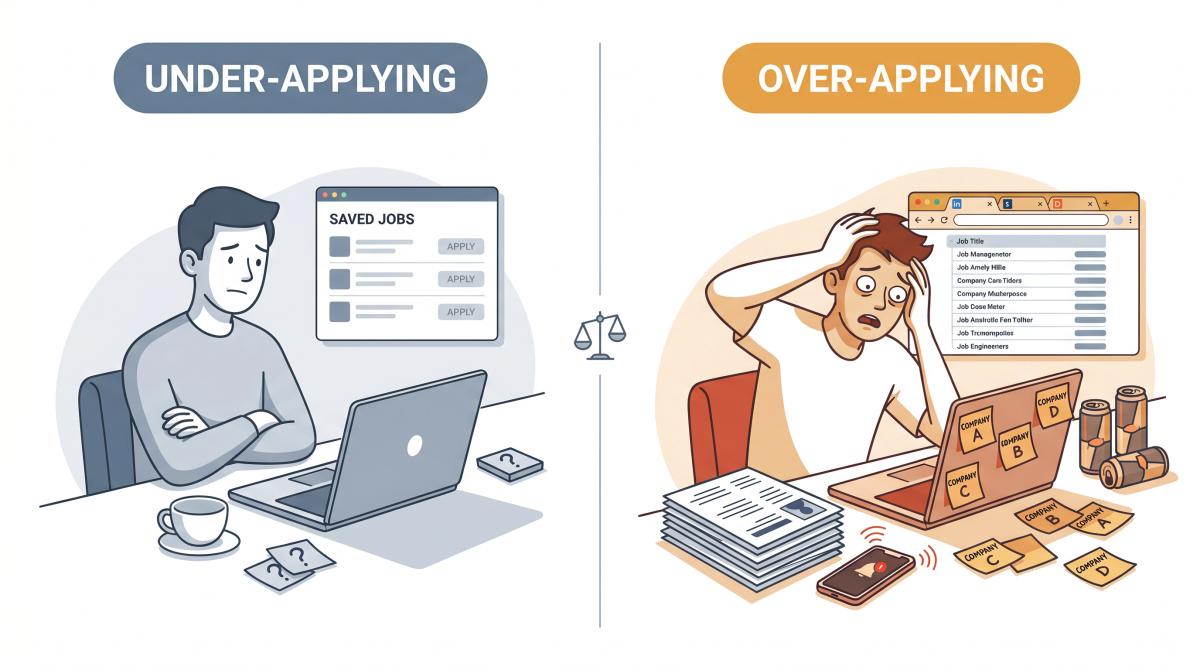
Signs You're Under-Applying
You're likely applying to too few jobs if your weekly submission count is under 5 while you're actively searching, or if you've had no interviews after several weeks despite keeping a pipeline going.
You might be applying too few if:
- You're sending fewer than 5 applications per week while actively needing work
- You've had no interviews in several weeks and no active pipeline
- You're waiting to hear from one company before applying elsewhere
- You only apply to roles that are a "perfect" match
- You dismiss roles because you don't meet 100% of the description
- Your tracker shows more "saved" entries than submitted applications
Fix: increase volume, loosen unnecessary filters, and apply to strong 70–80% matches. You don't need to be perfect. You need to be credible. Use AIApply's AI resume checker to understand where your actual fit stands before you rule yourself out.
Signs You're Over-Applying
You're likely applying to too many jobs if you can't recall what you applied for without checking, or if your materials aren't being adjusted between submissions.
You might be over-applying if:
- You can't remember what you applied for without checking
- You send the same unmodified resume to every role
- You apply to jobs you would actively decline if an offer came
- Your applications contain typos you only notice after hitting submit
- Your resume doesn't reflect the job title or core skills in the posting
- You're missing recruiter calls because you're buried in new applications
- You're getting interviews but too exhausted to prepare
- You feel worse after every application session, not better
Fix: reduce volume and improve conversion. Use AIApply's AI resume rewriter to sharpen your materials for the roles you actually care about. Applying to fewer jobs with sharper materials will almost always outperform mass submission.
Getting Zero Interviews? Check These 6 Things First
If you've submitted 30–50 applications and heard nothing, don't immediately double your volume. Audit the funnel first.
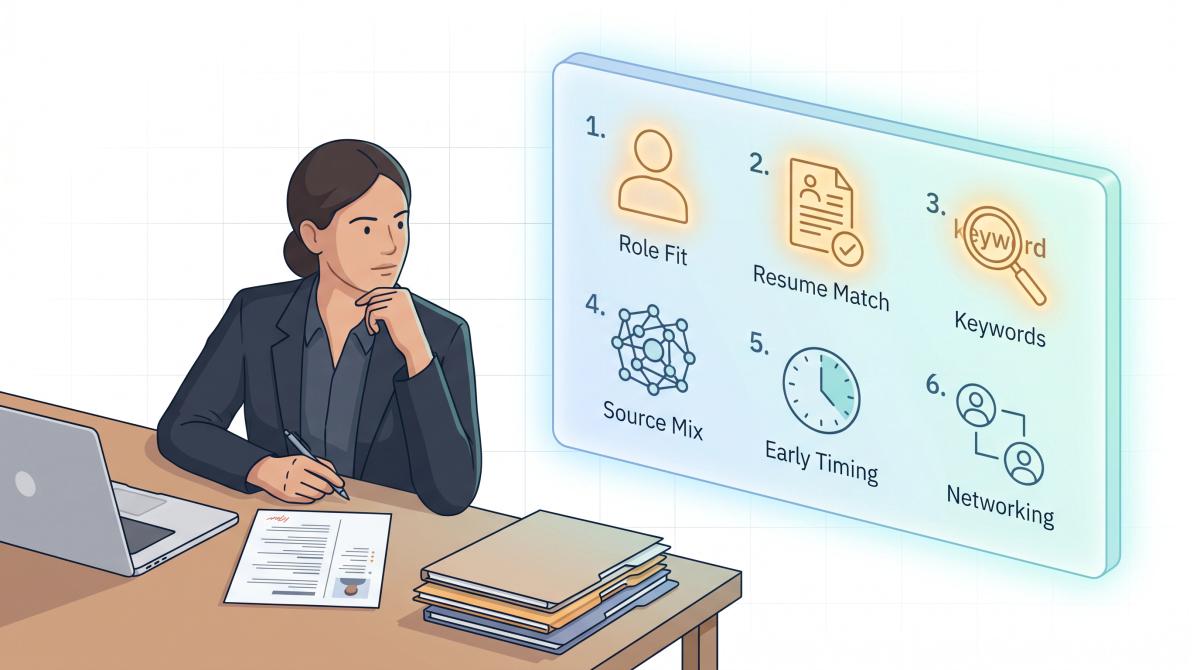
① Role fit. You're likely applying to roles you don't actually qualify for, which is the fastest way to get screened out before a human ever reads your resume. Be honest about the real requirements, not the fantasy version of the list where you'd get hired if they could see how motivated you are. If every posting asks for 5 years of experience and you have 1, find adjacent roles and work toward the bigger targets from there.
② Resume match. Does your resume clearly reflect what the job asks for? If the job says "Customer Success Manager" and your headline says "Account Specialist," you're making the hiring manager do matching work they shouldn't have to do. That costs you. Run your materials through AIApply's AI resume rewriter to align your experience with the language and priorities of the roles you're targeting.
③ Keywords. ATS systems and the recruiters who review shortlists both rely on clear signals. If the job description emphasizes "Salesforce," "pipeline management," and "enterprise accounts," those phrases should appear naturally in your resume if they genuinely describe your experience. AIApply's Resume Scanner checks your materials against 50+ ATS systems and surfaces the specific keyword gaps before you apply.
④ Source mix. If all your applications go through one giant job board, change channels. Research shows smaller or more specialized platforms consistently produced higher response rates than the biggest boards.
⑤ Timing. You're probably applying too late, after the strongest candidates have already been shortlisted. Many hiring teams review the first solid batch of applications before they ever reach the 400th, so set job alerts and apply within the first 24–48 hours of a posting going live to measurably improve your response rate.
⑥ Networking. A cold application is the weakest version of your candidacy. A warm application with a referral, a prior conversation, or an internal connection is meaningfully stronger. You don't have to know the hiring manager. You just have to know someone who knows them.
Getting Interviews but No Offers? Shift Your Time
If you're landing interviews, your application volume isn't the bottleneck. Adding more applications won't fix what's happening in the interview room.
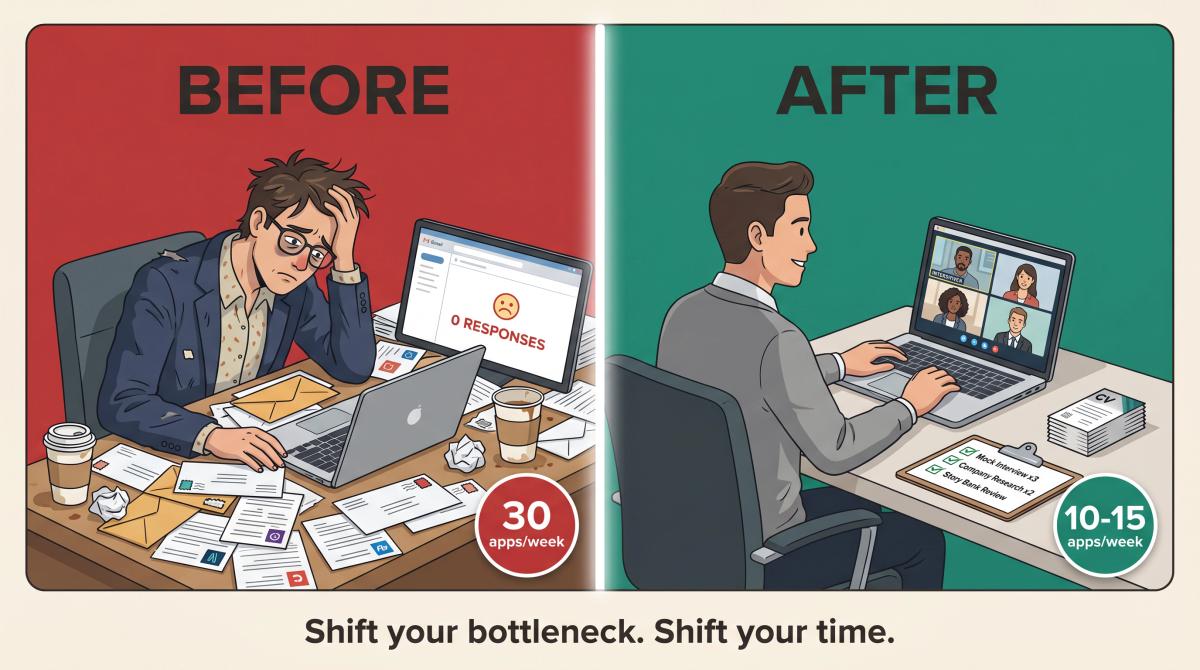
Instead of this:
- 30 applications per week
- 0 dedicated interview prep time
Do this:
- 10–15 applications per week
- 3 mock interview sessions
- 2 company research sessions per interview
- 1 story bank review (your key examples, quantified and ready)
- Follow-up emails after every interview, same day or next morning
AIApply's Interview Buddy provides real-time on-screen coaching during live video interviews on Zoom, Google Meet, and Teams. For mock practice beforehand, AIApply's AI Mock Interview tool generates role-specific questions and gives instant feedback on your answers. Both help you close the gap between "getting in the room" and "getting the offer."
Your bottleneck has moved from application volume to interview performance. Respect that shift and allocate your time accordingly.
The Math Behind Your Weekly Job Application Target
Think of each application as a small probability event. If your interview rate is 5%, each application carries a 5% chance of turning into an interview.
Run the numbers at different volumes:
At 5% interview rate:
- 15 applications → 1 − (0.95¹⁵) = ~54% chance of at least one interview
- 30 applications → 1 − (0.95³⁰) = ~79% chance
- 40 applications → 1 − (0.95⁴⁰) = ~87% chance
That's why unemployed job seekers often need more than 10–15 per week. Not because they're worse candidates, but because they need faster pipeline creation to stay financially stable.
Now look at what happens when you improve your interview rate.
At 10% interview rate:
- 15 applications → 1 − (0.90¹⁵) = ~79% chance
Same number of applications. Much better odds.
The insight: the smartest job seekers work both sides of the equation. More quality applications and a better conversion rate. Not just more applications.
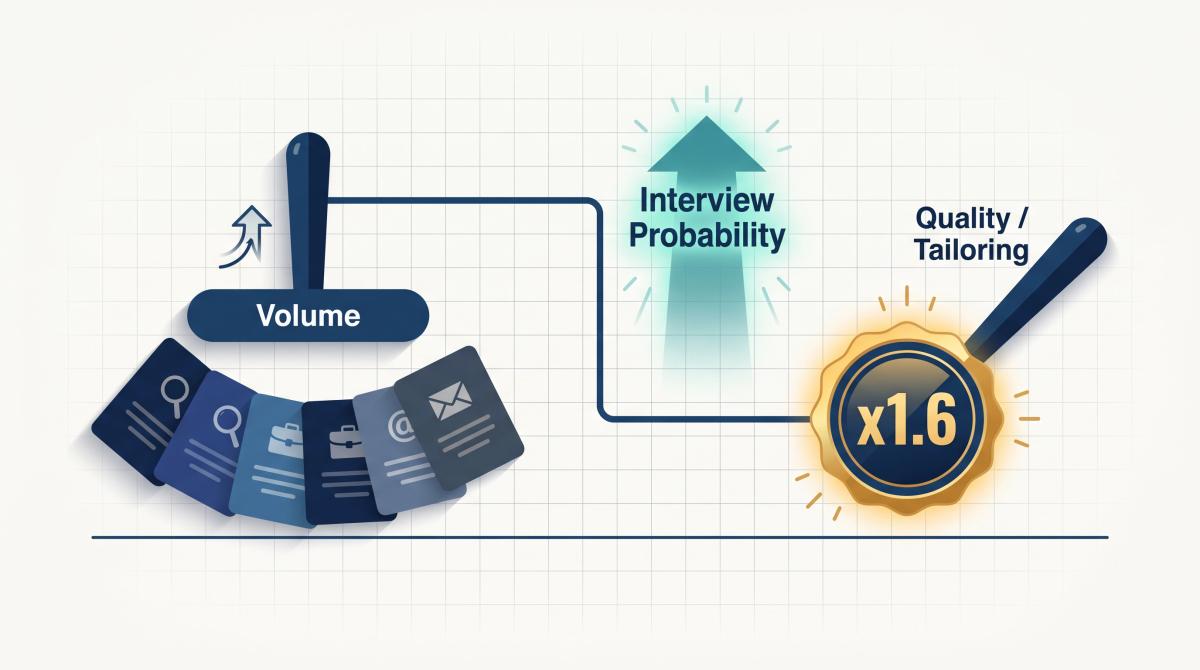
A 2025 job search study found that tailored resumes converted to interviews, offers, or hires at 5.8%, compared to 3.73% for untailored resumes. That's about 1.6x more effective for the same volume of applications.
Tailoring isn't optional. It's the multiplier.
How AI Tools Help You Apply to More Jobs Each Week
AI doesn't mean "spray 500 applications and hope." Used badly, AI helps you spam faster. Used well, it helps you maintain quality at higher volume. That's a real difference.
A good AI-assisted application workflow looks like this:
① Create a strong base resume that accurately represents your experience
② Scan it against a specific job description to find keyword gaps
③ Tailor the headline, skills section, and top bullets for that role
④ Generate a role-specific cover letter
⑤ Review everything manually before submitting
⑥ Submit through the right channel for that role
⑦ Track which version you used
⑧ Follow up at the right time
AIApply's Auto Apply handles a meaningful portion of this workflow automatically. Each credit equals one automatic job application, the credits never expire, and the system applies to roles that match your career preferences. For Tier 2 applications, this scales your reach while your best energy stays focused on Tier 1.
The catch: your preferences need to be tight. Automation is only as good as the targeting rules you give it. Broad filters produce broad (and mostly irrelevant) results. Specific filters produce specific (and much more promising) matches.
The approach that works: use AIApply for speed and scale on matched roles, while keeping the high-value applications manually reviewed and submitted. Think of it as a two-lane pipeline. Lane A is 5–15 manual, deeply tailored applications for your best opportunities. Lane B is AI-assisted volume for solid-fit roles with clear keyword and title alignment.
Your 30-Day Job Application Plan
A month is enough time to go from zero data to a real, calibrated system.
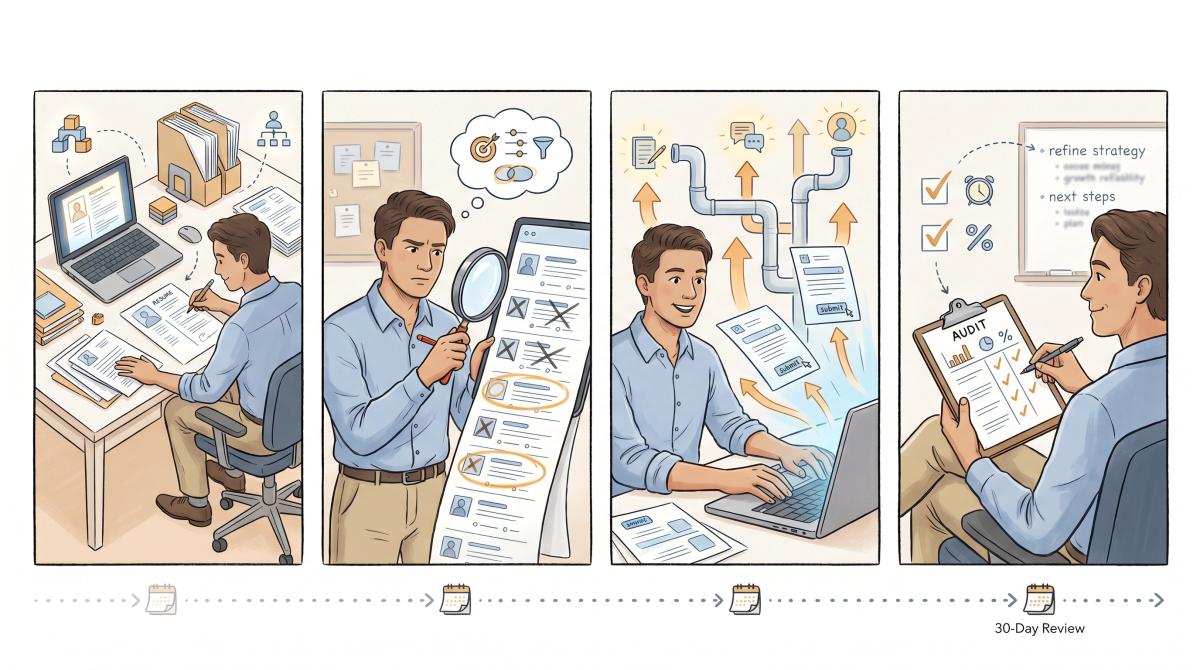
Week 1: Build Your Foundation and Collect Baseline Data
Target: 10–15 applications
Tasks for this week:
- Build or update your resume (use AIApply's Resume Builder to create an ATS-optimized version)
- Create a secondary resume version if you're targeting two different role types
- Apply to 10–15 genuinely matched roles
- Send 5 networking messages
- Set up your tracking system and log every application
Goal: Learn your actual starting interview rate. Don't optimize anything yet. Just collect data.
Week 2: Refine Your Targeting
Target: 15–20 applications
Tasks:
- Cut the job boards that produced zero responses in Week 1
- Tailor your resume more aggressively for the roles that feel closest
- Follow up on all Week 1 applications that are now 7–10 days old
- Send 5–10 networking messages, especially to people inside companies you applied to
Goal: Improve conversion, not just volume. One fewer generic application and one more tailored one is almost always a better trade.
Week 3: Scale Up What's Working
Target: 20–30 if unemployed, 10–15 if employed
Tasks:
- Apply more through the channels and role types that produced responses in Week 1–2
- Use Auto Apply for Tier 2 roles to maintain volume without burning hours
- Keep Tier 1 roles manual and fully tailored
- Start mock interview practice even before interviews arrive
Goal: Build a real, active pipeline rather than a theoretical one.
Week 4: Audit and Adjust
Ask yourself:
- How many total applications did I submit this month?
- How many replies (any kind)?
- How many recruiter screens?
- How many interviews?
- Which source produced the best response rates?
- Which resume version outperformed?
- Where did I waste the most time?
Then choose your path forward:
- Interviews are coming: maintain current volume or reduce slightly; shift time to prep
- No interviews yet: fix resume and targeting before increasing volume
- Interviews but no offers: reduce applications significantly and focus on interview performance
Frequently Asked Questions
Is 10 applications a week enough?
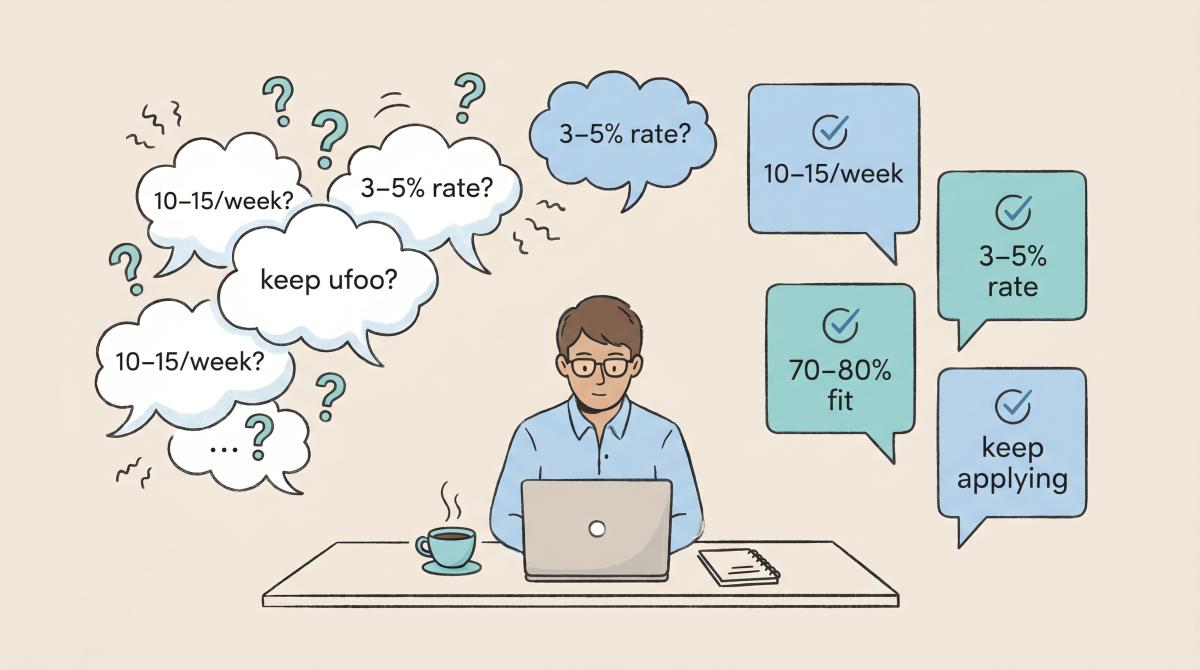
Yes, if they're high-quality and you're not under time pressure. If you're unemployed, behind on rent, or actively need income, 10 is probably too few. The number itself isn't the constraint. What matters is whether those 10 applications are genuinely well-matched and well-presented.
Is 50 applications a week too many?
Not necessarily, but it's too many if quality drops. 50 targeted, tailored applications can work well. 50 generic applications fired off through a job board usually produce frustration, not offers. The test is simple: can you name every company you applied to this week and explain why you'd be a good fit?
Should I apply every day?
You don't have to apply every day. A sustainable rhythm is 3–4 application days, 1 follow-up and networking day, and 1 audit and planning day. Daily application sessions with no follow-up system often lead to a messy pipeline where you can't tell what's actually moving.
Should I apply to jobs where I don't meet every requirement?
Yes, if you meet most of the core requirements. No, if you're missing the primary skill the entire role is built around. Most job descriptions are wish lists, not hard thresholds. If you meet 70–80% of the requirements and the gap is in "nice to have" skills, apply. If the gap is in the fundamental technical requirement (e.g., you don't know Python for a Python engineering role), find an adjacent role while building that skill.
Should I use the same resume for every job?
No. You can and should use the same base resume, but adjust the headline, summary, skills section, and top bullets for each role type. It doesn't need to be a complete rewrite every time. A few targeted changes to reflect the specific language and priorities in the job description makes a material difference. Use AIApply's AI resume rewriter to make those targeted adjustments quickly without starting from scratch. A 2025 job search study found tailored resumes converted 1.6x more effectively than untailored ones.
How long should I keep applying after an interview?
Keep applying until you have a signed offer in hand. Interviews are not offers. Verbal enthusiasm from a recruiter is not an offer. "You're our top candidate" is not an offer. The hiring process can fall apart at any stage, and keeping your pipeline active protects you against that.
What's the best weekly target if I need a job fast?
Start with 25–30 quality applications per week plus 10–15 networking actions. Use AIApply's Auto Apply to maintain volume on solid-fit roles while keeping your top opportunities carefully tailored. If your interview rate is below 3–5% after two weeks, pause and fix your resume and targeting before adding more volume. Speed comes from quality conversion, not raw quantity.
What is a good interview rate?
For cold online applications, a 3–5% interview rate is typical and not a cause for alarm. A 7–10% rate is solid. Above 10% suggests strong targeting and materials. Below 2% consistently, after 20+ applications, usually signals a resume or targeting problem rather than a volume problem.
How many jobs should I apply to on LinkedIn?
LinkedIn's response rate of around 3.1% is lower than some other platforms, particularly for roles where recruiters receive hundreds of Easy Apply submissions. LinkedIn works best as part of a broader strategy. Use it for company research, direct recruiter outreach, and roles where you have a genuine connection or profile advantage. Don't rely on it as your only channel.
Does applying to more jobs hurt your chances?
Not directly, but it can hurt indirectly. When you apply to too many jobs, the quality of each application tends to fall, your follow-up becomes inconsistent, you can't prepare well for every interview you do get, and your morale often takes a hit. The volume itself doesn't hurt you. The reduction in quality that often comes with high volume does.
How do I track my job applications?
Use a simple spreadsheet or a dedicated job tracking tool. Your tracker should include: company name, role title, date applied, source/platform, resume version used, cover letter used, contact person (if any), scheduled follow-up date, current status, and outcome. Review it every Friday and every Sunday before the new week starts. A tracker turns your job search from a stream of disconnected submissions into a managed pipeline you can actually optimize.
Can AIApply help me apply to more jobs without lowering quality?
Yes. AIApply helps you build ATS-optimized resumes with the Resume Builder, generate tailored cover letters with the Cover Letter Generator, check for keyword gaps with the Resume Scanner, submit matched applications automatically with Auto Apply, and prepare for interviews with Interview Buddy. The smart approach is to use automation for volume on solid-fit Tier 2 roles, while keeping your best applications carefully reviewed. That's how you scale without sacrificing the quality that actually converts to offers.
How Many Jobs Should You Apply to Per Week: The Final Word
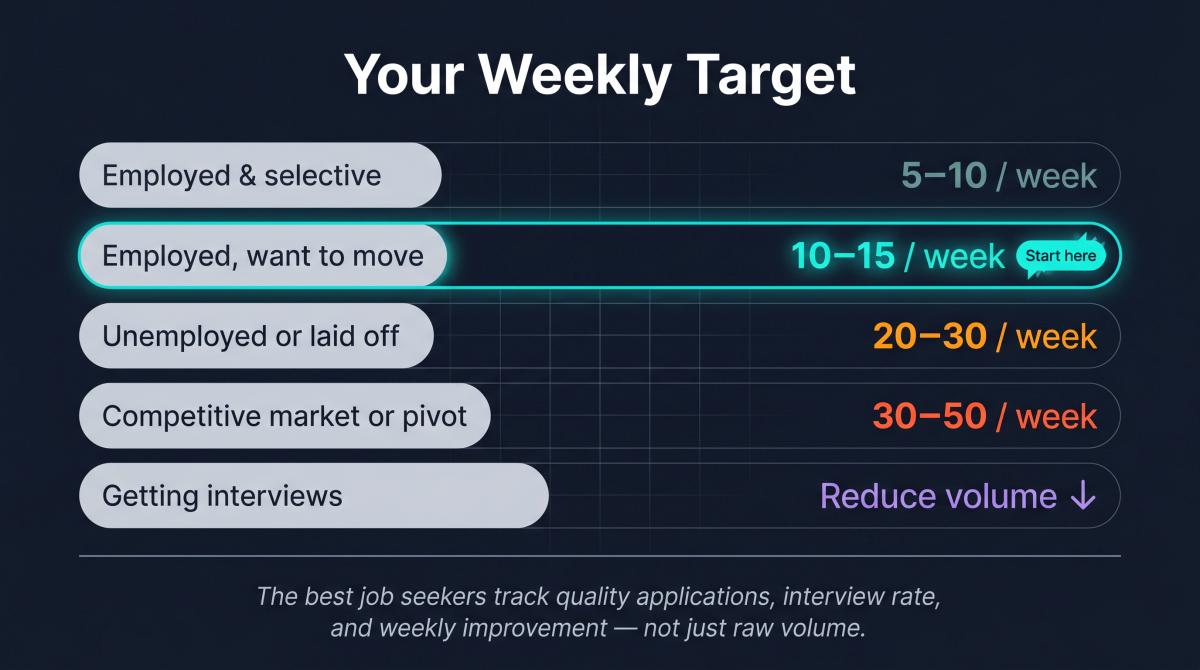
Apply to 10–15 jobs per week as your starting point.
Then adjust based on your situation:
- Employed and selective: 5–10 may be plenty
- Seriously searching: 10–20 is realistic
- Unemployed and needing speed: 20–30 is the target
- Highly competitive market or brutal funnel: 30–50 can make sense, but only with tracking and quality control
- Getting interviews: reduce applications, prepare harder
- Getting zero interviews: fix conversion first, then add volume
The best job seekers don't ask "how many jobs did I apply to?"
They ask: how many quality applications did I send, what was my interview rate, and what will I improve next week?
Start at 10–15. Track the results. Adjust every two weeks. Keep the pipeline moving until you have a signed offer.