Special Skills for Acting Resume: What to List in 2026
Know exactly what special skills to put on your acting resume in 2026: every category, wording examples, and 8 copy-paste templates.


Audio and video are AI narrations of this article.
Special Skills for Acting Resume: What to List in 2026
Narrated version · 6 min
Most actors treat the special skills section like a bonus line at the bottom of the page. Something to fill once, forget, and never update. Casting directors scrolling through your profile don't see it that way.
When a CD needs someone who speaks Mandarin, rides Western saddle, or can pull off a convincing cockney accent, that skills section is the first thing they search. Not your headshot. Not your credits. The skill.
Casting Networks' talent profile guidance, updated in March 2026, shows that actors can now add skills directly to their profiles, mark proficiency levels as beginner, intermediate, or advanced, and even attach a short media clip to verify each one. Casting directors can search the same fields when building a role. Your resume is no longer just a document someone reads. It's a database someone queries.
That changes things. A vague skills line that impressed your drama teacher in 2019 is actively working against you now, because it doesn't return in the right searches. A specific, honest, well-structured skills section shows up when a CD needs exactly what you have.
By the end of this guide, you'll know what to list, how to word each entry, what to cut, how to organize it for different types of work, and which skills are worth adding to your training pipeline. We've also included eight ready-to-use templates you can adapt immediately (or you can build your acting skills section in AIApply's resume builder and get a clean, formatted document in minutes).
What Are Special Skills on an Acting Resume?
There's a precise industry definition worth knowing.
Casting Workbook's professional resume guidance defines a special skill as an ability you have trained for and can perform better than the average person of your age and gender. Not a casual interest. Not something you tried once. A skill you can execute reliably, with some degree of demonstrated competence.
That definition is useful because it cuts through a lot of noise.
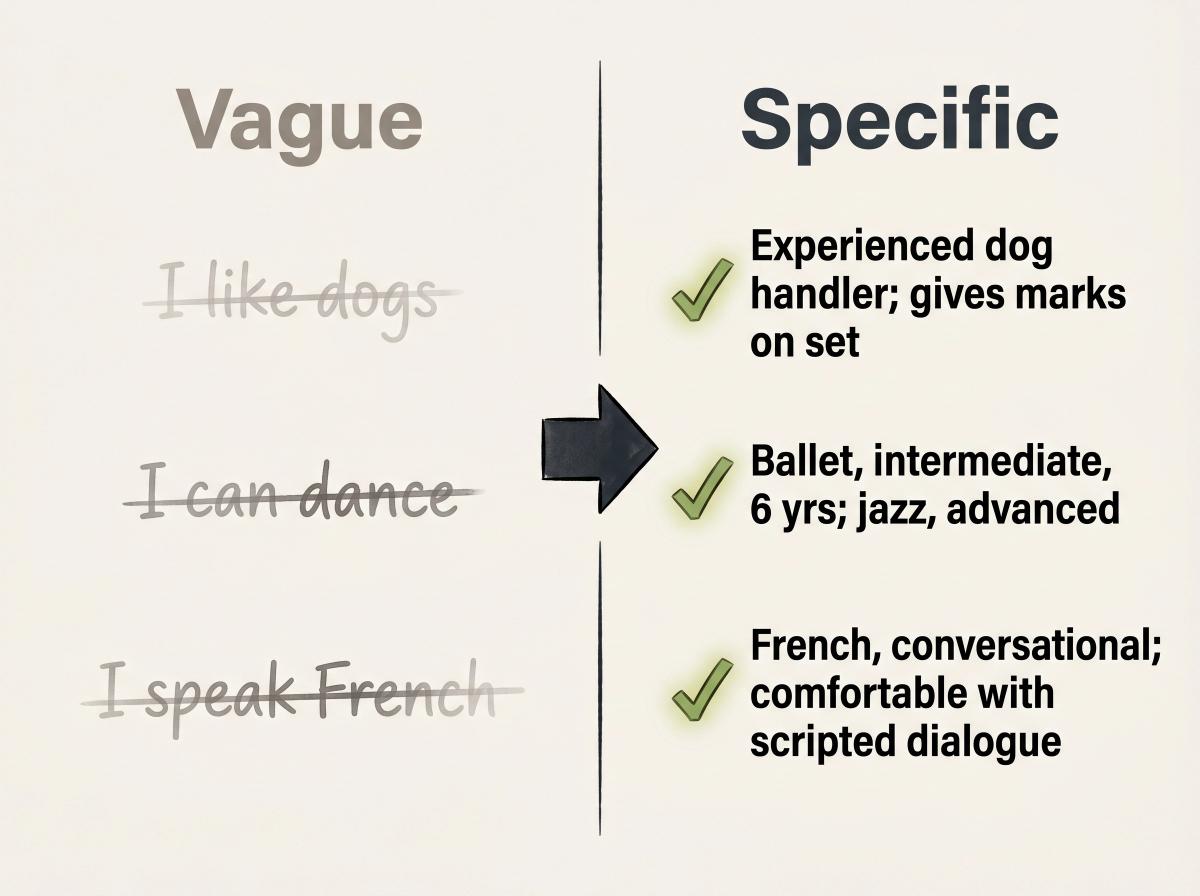
"I like dogs" is not a special skill. "Experienced large-dog handler; confident giving marks and commands on set" is.
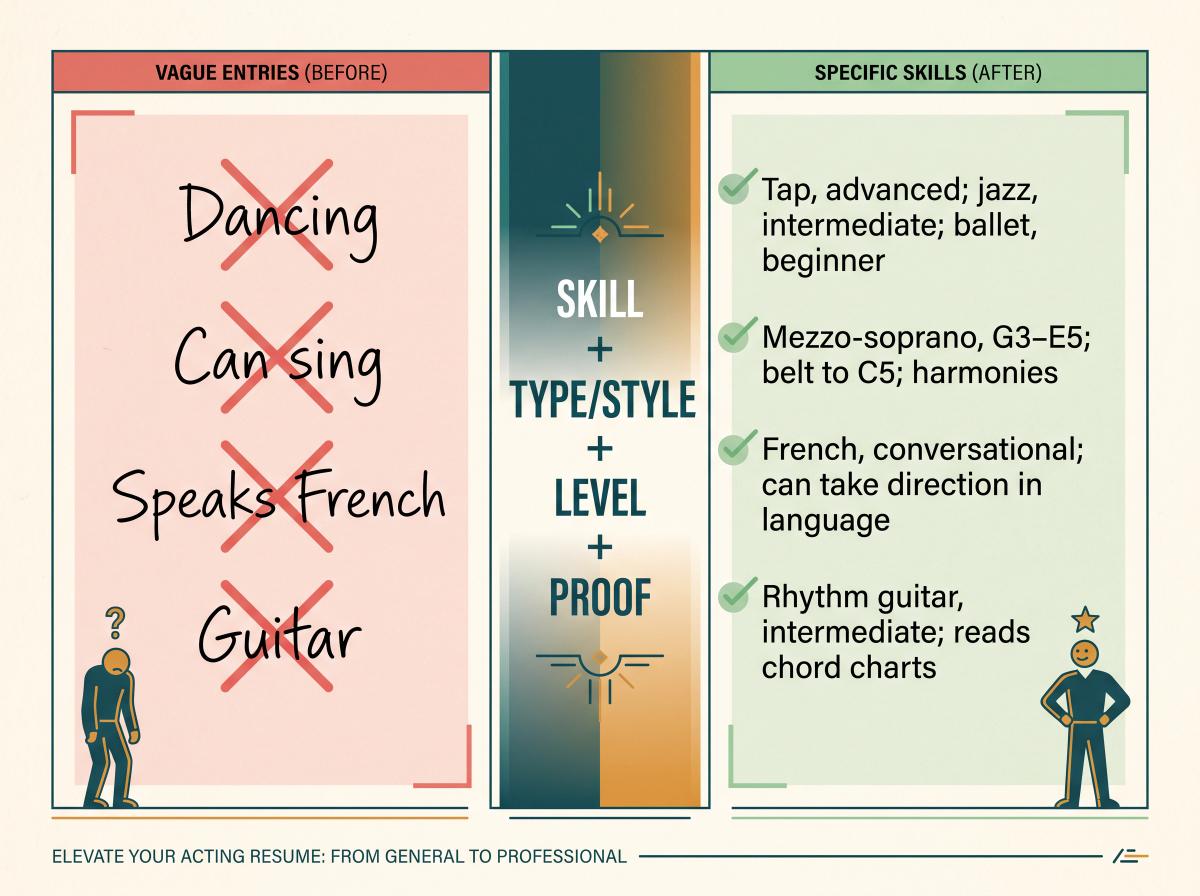
"I can dance" is a starting point, not a skill entry. "Ballet, intermediate, 6 years; jazz, advanced; tap, beginner" is useful information.
"I speak French" is vague. "French, conversational; comfortable with scripted dialogue" is what casting can actually use.
The other thing the definition implies: casting platforms search every word on your resume. Actors Access' profile help notes that special skills are part of what casting directors see on your profile, alongside your headshots and size card. Both humans and search algorithms are reading this section. That's the dual job your skills section has to do.
Which means specificity isn't just about sounding professional. It's about being findable. Understanding how experience fits into your overall resume structure (and where the skills section belongs relative to your credits and training) gives your profile the architecture casting platforms actually parse.
The One Rule Every Actor Should Follow Before Listing Skills
Before you add anything to your special skills section, ask yourself one question:
Could I walk into an audition room tomorrow, cold, and demonstrate this skill without embarrassing myself, slowing down production, or creating a safety issue?
If the answer is no, don't list it on your printed resume. You can still train it. You can still add it later. But don't market a version of yourself that doesn't exist yet.
Spotlight's acting CV guidance makes this point bluntly: if you rode a horse once on holiday, or took a few ballet classes as a child, it has no place on your CV. Backstage's special skills guide is equally direct: claiming expertise you don't have can cost a production time and money, and that's the kind of reputation that sticks.
The "tomorrow test" is especially important for safety-sensitive skills. We'll cover those in detail later.

Acting Resume Special Skills: Every Category You Need
This is the reference section. Scan for categories that apply to you. Each one includes specific wording examples because the wording matters as much as the skill itself.
How to List Accents and Dialects on Your Acting Resume
Accents are often the highest-value entry in the section. A strong, sustained accent can instantly change which roles you're eligible for, and casting platforms let CDs filter by accent.
List specific accents, never a vague claim:
- Native Manchester
- Native Yorkshire
- RP (Received Pronunciation)
- Heightened RP
- General American
- Southern US, Texas
- New York, Brooklyn
- Irish, Dublin
- Scottish, Glasgow
- London, Cockney
- London, Estuary
- Australian
- New Zealand
- South African
- French accent
- German accent
- Russian accent
- Italian accent
Don't write "all accents." Nobody believes you, and it returns nothing in a filtered search.
Spotlight recommends being realistic and specific, and suggests including voice clips on your profile so casting can actually hear the range.
Good formatting:
Accents: native London; RP; general American, strong; Dublin, working; Glasgow, working.
How to List Languages on Your Acting Resume
Language skills are valuable across commercials, international co-productions, streamers, voiceover, and any role where the actor needs to improvise or take direction in another language. Actors who also work as language tutors or instructors between productions often find this skill translates directly. You can see what ESL teacher roles require in terms of language skills to understand how casting directors think about language proficiency levels.
Use honest labels:
- Native
- Fluent
- Conversational
- Basic
- Can learn lines phonetically
- Can improvise
- Can take direction in the language
Example entries:
- Spanish, fluent; can improvise and take direction
- French, conversational; comfortable with scripted dialogue
- German, fluent, native accent
- Polish, native
- Mandarin, basic; can learn lines phonetically
- ASL, intermediate (specify training source)
- Italian, conversational; can take direction in language
Don't write "French" if you remember numbers and a few phrases. Conversational means you can hold a real conversation, sustain a scene, and respond to unexpected direction. If you can't, use "basic" or "can learn lines phonetically."
How to List Singing and Voice Skills for Actors
For singing, casting needs three things: voice type, range, and style. Without them, "can sing" tells them almost nothing. If your acting path runs through musical theatre, a strong vocal section is as important as your credits. See our full musician resume guide for how professional performer-musicians structure the entire document.
Voice types and ranges:
- Soprano, C4–C6
- Mezzo-soprano, G3–E5
- Alto, F3–D5
- Tenor, C3–B4
- Baritone, G2–A4
- Bass, E2–E4
Styles and additional skills:
Legit musical theatre, belt, jazz vocals, pop vocals, rock vocals, classical, gospel, choral harmony, sight-singing, beatboxing, scat, rap, spoken word, yodeling, harmonies
Voiceover and audio skills:
ADR (Automated Dialogue Replacement), audiobook narration, commercial voice, character voices, looping
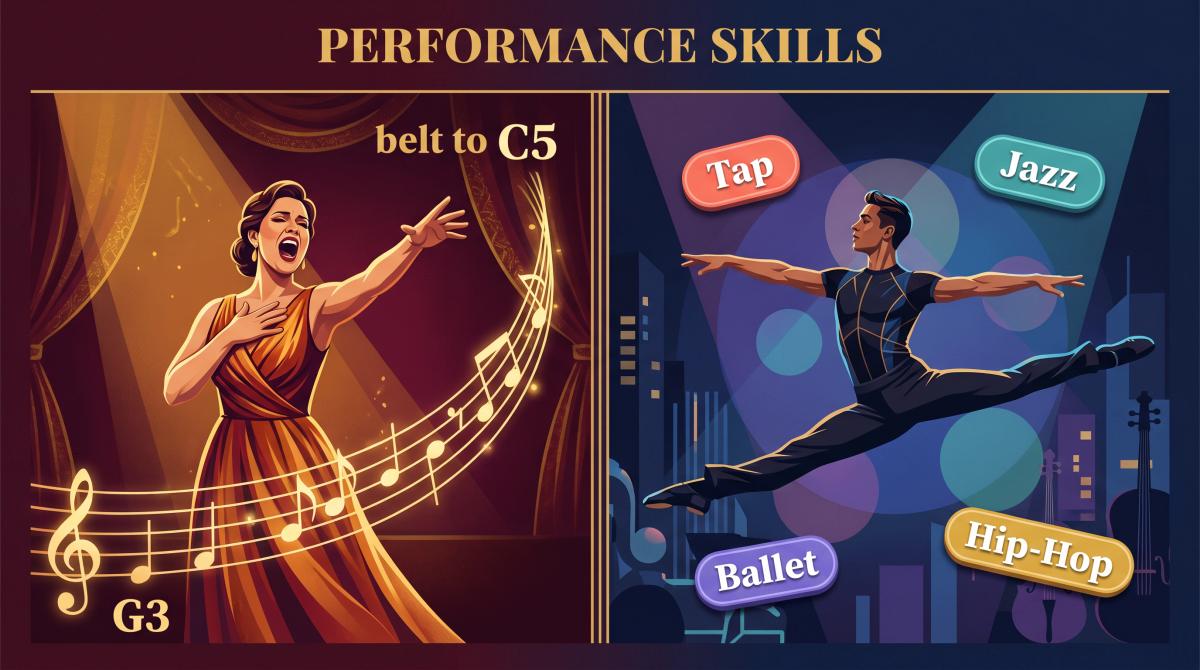
Good line: Voice: mezzo-soprano, G3–E5; belt to C5; harmony; sight-singing.
Bad line: Voice: good singer.
How to List Dance Skills on Your Acting Resume
Every dance entry should include style and level. "Dancing" is useless. "Tap, advanced; jazz, intermediate; ballet, beginner" is a real entry. Many actors who teach dance between productions build their resumes the same way an adult education instructor would: highlighting specific disciplines, certifications, and teaching formats, not just the activity.
Styles to consider:
- Ballet
- Tap
- Jazz
- Musical theatre dance
- Contemporary/modern
- Hip-hop
- Ballroom (waltz, tango, quickstep)
- Salsa, bachata, swing, lindy hop
- Flamenco
- Bollywood
- Irish dance
- African dance
- Breakdance
- Pole
- Heels
- Period dance
- Folk dance
- Choreography
- Freestyle
- Dance captain experience
Spotlight specifically recommends listing dance styles clearly and being honest about level, especially if your experience is basic.
How to List Musical Instruments on Your Acting Resume
"Guitar" is not enough for actor-musician work. Specify type, level, and reading ability. For the full picture of how musicians structure a performance resume (including the instruments section, credits, and training), the musician resume guide covers every component.
Examples:
- Piano, advanced; sight-reading; works from lead sheets
- Guitar, rhythm and fingerstyle, intermediate; reads chord charts
- Violin, beginner
- Drums, professional touring experience; reads charts; comfortable with click track
- Double bass, intermediate; jazz improv
- Ukulele, intermediate; chord charts; strumming and fingerpicking
Additional instruments: bass guitar, viola, cello, flute, clarinet, saxophone, trumpet, trombone, French horn, harmonica, accordion, banjo, mandolin, harp, sitar, tabla, djembe, bagpipes
Spotlight notes that musical instruments are especially valuable for musical theatre and actor-musician work.
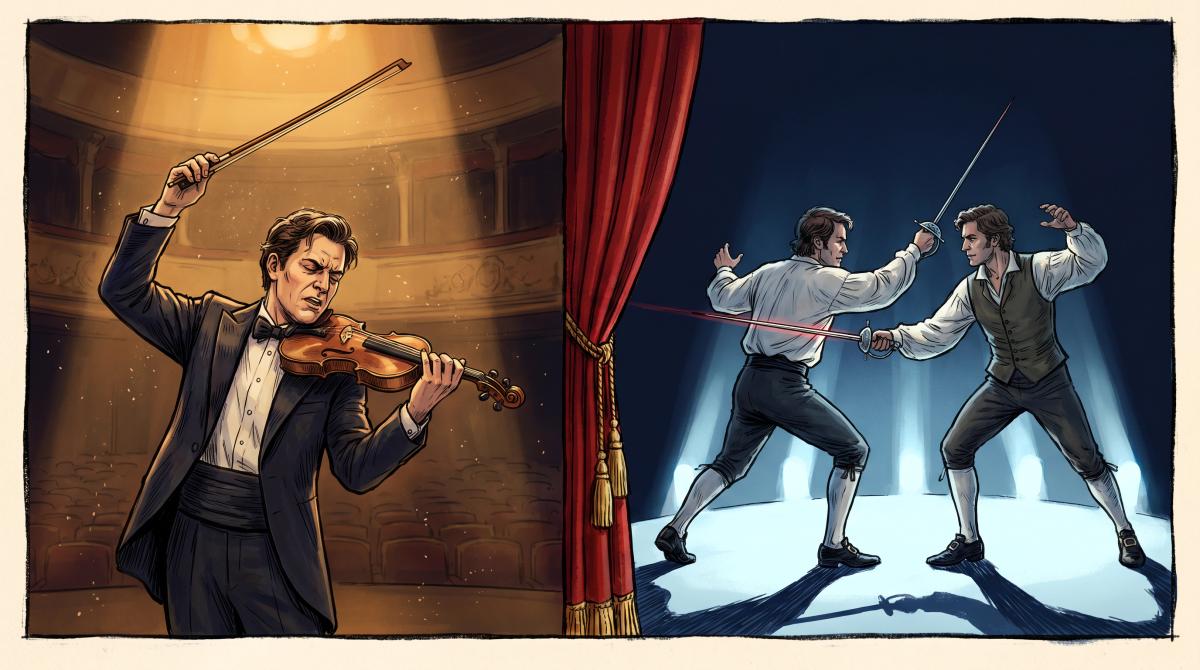
How to List Stage Combat and Screen Combat Skills
This is one of the most valuable categories on any acting resume, but also one of the easiest to overstate. Get this wrong and you're either a liability on set or a liar on your resume.
Common entries:
→ Stage combat (specify weapons)
→ Screen combat
→ Unarmed combat
→ Falls
→ Slap/punch choreography
→ Rapier and dagger
→ Single sword
→ Smallsword
→ Broadsword/two-handed sword
→ Sword and shield
→ Staff / quarterstaff
→ Knife
→ Archery
→ Fencing
→ Tactical movement for screen
→ Theatrical firearms safety training
Use certifications when you have them.
The Society of American Fight Directors (SAFD) awards its Skills Proficiency Test (SPT) after at least 30 hours of training with a certified teacher, and recognizes eight weapon disciplines: unarmed, rapier and dagger, two-handed sword, single sword, smallsword, sword and shield, staff, and knife. Theatrical firearms safety training is also available through SAFD-certified instructors.
Good US entry: Combat: SAFD SPT, unarmed and rapier and dagger; screen combat, intermediate; falls, basic.
For UK actors, the Academy of Performance Combat (APC) offers industry and Equity-recognised qualifications at basic, intermediate, advanced, and honours levels covering safety, technique, and dramatisation.
Good UK entry: Combat: APC basic, single sword, unarmed, rapier; current.
On firearms: Don't list "guns" casually. Actors' Equity Association (AEA) theatrical firearms safety guidance is clear that actors should be honest if they have no training and should not overstate qualifications. The property master or armorer trains actors in safe use of any firearm they handle on set.
Better entry: Theatrical firearms safety training; follows armorer and property master direction.
Sports and Athletics Skills Worth Listing
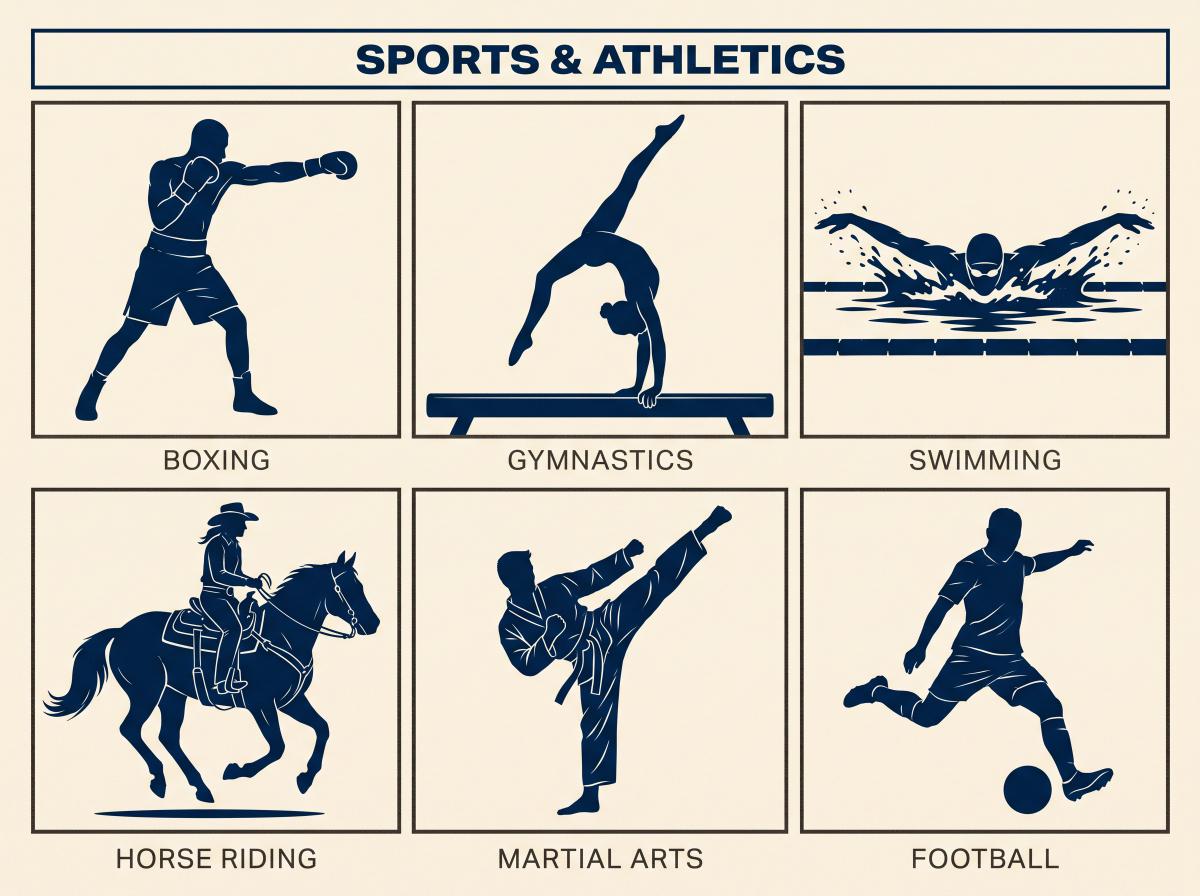
Sports are useful when they create believable physical behavior on camera. "Athletic" tells casting nothing. "Football (soccer), competitive striker, 10 years; swimming, advanced; boxing, intermediate" tells them quite a lot.
Full list of sports casting regularly searches for:
- Football/soccer
- American football
- Basketball
- Baseball
- Cricket
- Rugby
- Tennis / badminton / squash
- Golf
- Swimming / diving / surfing
- Rowing / sailing
- Skiing / snowboarding / ice skating
- Roller skating / skateboarding
- Gymnastics / cheerleading
- Boxing / kickboxing / wrestling
- Judo / karate / taekwondo / Brazilian jiu-jitsu / krav maga
- Yoga / pilates
- Parkour
- Rock climbing / bouldering
- Running / sprinting / marathon
- Weightlifting / bodybuilding
- Cycling / mountain biking
How to List Horseback Riding and Animal Handling Skills
Horseback riding appears constantly in period drama, fantasy, westerns, rural stories, commercials, and historical projects. It's also genuinely dangerous to fake. If you've only sat on a horse once, don't list it.
Specific entries:
- Horseback riding, English saddle, walk/trot/canter, intermediate; comfortable grooming and tacking
- Horseback riding, Western saddle, walk/trot/canter; barrel racing, beginner
- Bareback riding, basic
- Show jumping, competitive, 4 years
- Horse handling and grooming
- Dog handling; confident with large breeds on leash and marks
- Bird handling; falconry trained
- Large animal confidence (on-set experience)
- Livestock handling
Actors with genuine childcare experience (working with children on educational or family productions) bring a similar kind of real-world credibility. Our childcare resume guide shows how to document that professional experience in a way that carries weight on both your acting resume and any general application.
How to List Driving and Specialist License Skills
This one depends on market.
In the US, a standard driver's license often isn't specific enough for a one-page resume, unless the role or market makes it relevant. Backstage notes that most experts don't consider a regular license worth listing, though stick shift can be. In the UK, Spotlight includes driving licence among the skills casting directors search for on profiles.
What is worth listing:
- Full clean UK driving licence, manual
- Manual transmission (stick shift), US
- Motorcycle licence
- Scooter / moped
- Van driving, confident
- HGV / lorry (if licensed)
- Precision driving (only if formally trained)
- Cycling
- Mountain biking
- Boat handling / sailing
- Jet ski
- ATV / quad bike
- Snowmobile
- Tractor
- Forklift (if certified)
- Pilot licence (if real)
Circus, Aerial, and Specialty Movement Skills
These skills are visual, memorable, and often useful for commercials, theatre, fantasy productions, music videos, and physical comedy. Don't overlook them.
- Aerial silks, intermediate
- Aerial hoop / lyra, beginner
- Trapeze
- Pole
- Acrobatics / tumbling
- Handstands
- Contortion
- Juggling (specify: 3 balls, 4 clubs, etc.)
- Contact juggling
- Unicycle
- Stilts
- Clowning (trained)
- Mime
- Mask (commedia, neutral)
- Puppetry (hand-and-rod, shadow, marionette)
- Object manipulation
- Fire performance (only if trained and insured)
- Magic / sleight of hand
- Balloon art
- Hula hoop / poi / diabolo
- Yodeling / beatboxing / body percussion
Improv, Comedy, and Hosting Skills for Actors
These are especially valuable for commercials, sitcoms, branded content, UGC (user-generated content) briefs, live events, and any audition where casting wants to see flexibility and naturalism.
- Short-form improv
- Long-form improv
- Sketch comedy
- Stand-up (specify: 10-minute set, open mic experience, etc.)
- Physical comedy
- Hosting / live presenting
- Crowd work
- Teleprompter
- Ear prompter
- Product demo
- UGC-style delivery
- Handheld selfie-camera performance
- Livestreaming
- Podcast hosting
- Corporate and trade-show presenting
On-Camera and Technical Skills Worth Listing
Not flashy, but these skills help you book practical commercial and industrial work. Many of the same technical skills that make a strong on-camera performer (clear delivery, continuity awareness, working to marks) are also the core competencies of a customer support specialist or client-facing professional. Worth noting on your general resume too if you ever apply to corporate training, internal communications, or customer-facing roles.
- Teleprompter / autocue
- Ear prompter
- Green screen
- Motion capture / performance capture
- ADR (Automated Dialogue Replacement)
- Looping / dubbing
- Audiobook narration
- Self-tape setup and editing
- Basic lighting / audio setup for self-tapes
- Slate and eyeline discipline
- Mark hitting
- Continuity awareness
Real-World Professional Skills That Boost Acting Resumes
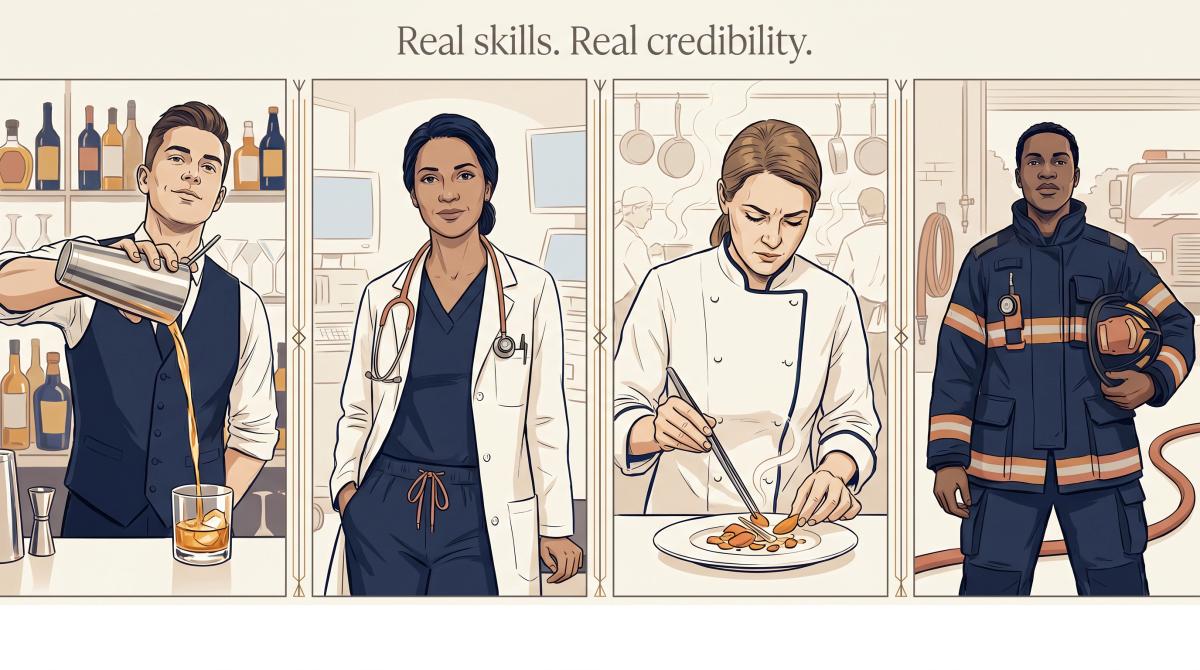
This category is consistently underused by actors, but it can be extremely valuable. Casting doesn't just need someone who plays a nurse convincingly. Sometimes they need someone who is one.
Real professional experience makes you more believable than an actor pretending, faster to work with, and easier to trust on set with specific tools or tasks. This is also the category where your acting resume and your general resume most clearly overlap. If you're documenting professional achievements for a hospitality or healthcare application, the same real-world experience that impresses a casting director can be reframed for a corporate ATS.
What counts:
- Bartender (include years; specify cocktail service, wine service, etc.)
- Barista
- Chef / professional cook / food stylist
- Server
- Nurse / paramedic / doctor (medical credentials)
- Firefighter experience
- Police / military experience (be specific)
- Lawyer / courtroom experience
- Teacher / instructor
- Certified yoga instructor (specify hours: 200 RYT, 500 RYT)
- Personal trainer (specify certification)
- Carpenter / electrician / mechanic / construction
- Hair and makeup artist
- Fashion stylist
- Tailor / sewing
- Tattoo artist
- DJ / photographer / videographer
- Journalist (print, broadcast)
- Sign language interpreter (ASL or BSL, specify level)
- Esports / competitive gaming
- Lab / science experience
- Farming / fishing / sailing
- Childcare professional
- Dog trainer
For actors who work customer-facing day jobs, understanding what customer service managers list on their resumes can help you frame hospitality and service experience more effectively across both documents.
Good example: Professional: bartender, 6 years; cocktail service; confident opening wine, handling bar tools, operating tills.
Bad example: Professional: good with people.
Creator and Social Media Skills Worth Adding in 2026
Casting has expanded beyond traditional roles into commercials, branded content, UGC, social video, and creator-led campaigns. Casting Networks' talent platform now actively lists UGC, commercials, reality TV, voiceover, and modeling as distinct casting categories.
If you have genuine creator-side skills, list them. Actors who build audiences around their craft increasingly work at the intersection of performance and content marketing. That crossover is covered well by the performance marketing manager skills guide if you're ever applying to hybrid creator-marketer roles.
- UGC product demo
- Handheld selfie-camera performance
- Livestream hosting
- Podcast hosting
- Short-form comedy (Reels / TikTok style)
- Video editing (specify: Premiere Pro, Final Cut, CapCut)
- Beauty tutorial delivery
- Fitness demo
- Cooking demo
- Gaming livestream
- Social media presenting
Don't list a follower count in the skills section unless the casting brief specifically asks for it or the platform has a dedicated field.
How to Word Special Skills on Your Acting Resume
A vague skills line doesn't just look unprofessional. It's unfindable in a database search and unconvincing to a human reader. The same principle applies whether you're formatting a casting profile or a general job application. Specificity is the difference between a resume that gets found and one that gets skipped. Our complete skills for resume list covers how to think about this across all categories.
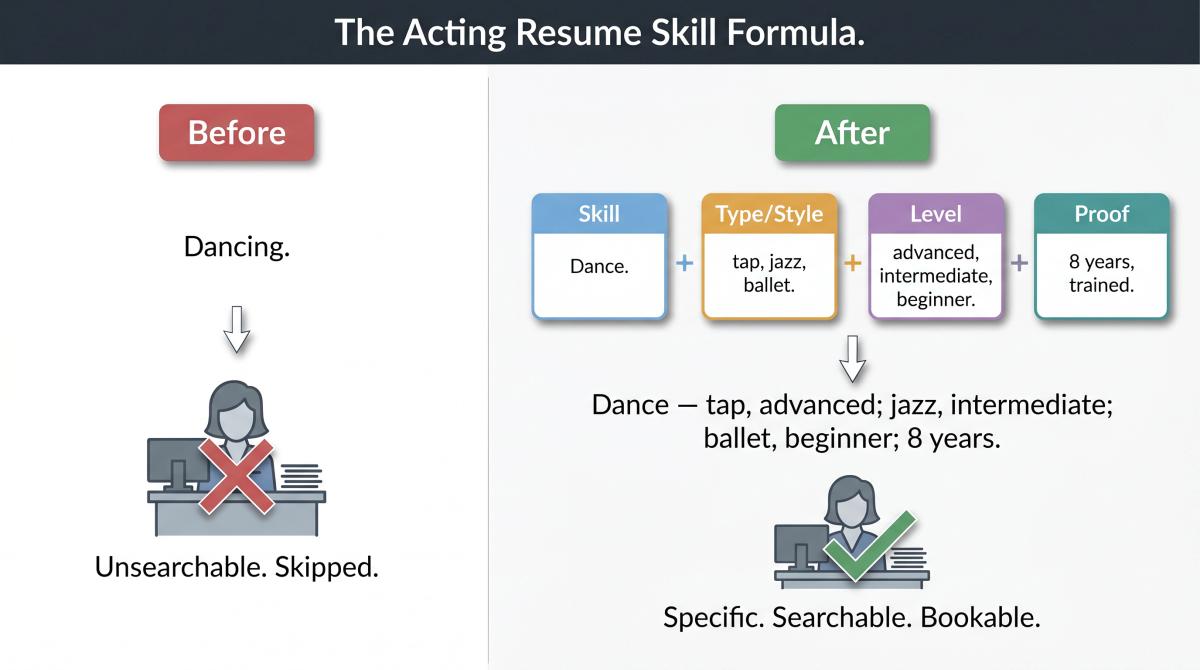
The formula:
Skill + Type/Style + Level + Proof (optional)
Examples in practice:
- Horseback riding, English saddle, walk/trot/canter, intermediate, 4 years
- Spanish, fluent; can improvise and take direction
- French, conversational; comfortable with scripted dialogue
- Singing, mezzo-soprano, G3–E5; belt to C5; harmonies
- Guitar, rhythm guitar, intermediate; reads chord charts
- Stage combat, unarmed, rapier and dagger; SAFD SPT, current
- Dance, ballet, intermediate; tap, beginner; salsa, advanced
- Driving, full clean UK licence, manual; confident with vans
- Teleprompter, commercial hosting, corporate video, live read
- Bartending, 5 years professional cocktail service
Specific beats impressive. Every time.
What Beginner, Intermediate, and Advanced Actually Mean
Casting Networks allows actors to specify proficiency levels for each skill. That's useful, but only if you use the levels honestly. Here's a practical standard:
| Level | What it should mean |
|---|---|
| Beginner | You've trained or practiced recently and can do a simple version with direction |
| Intermediate | You can perform the skill reliably in a scene, repeat it, and take direction |
| Advanced | You can perform under pressure, adapt, stay safe, and make it look natural |
| Professional / Certified | You have paid experience, a competitive background, current certification, or recognized training |
Don't call yourself advanced because you're better than your friends. Advanced means production can rely on you without a rehearsal day.
Bad vs. Better: How to Word Your Special Skills
| What not to write | What to write instead |
|---|---|
| Accents | Native Birmingham; RP; general American, strong |
| Dancing | Tap, advanced; jazz, intermediate; ballet, beginner |
| Singing | Mezzo-soprano, G3–E5; belt to C5; harmony |
| Sports | Tennis, competitive, 8 years; swimming, advanced |
| Horseback riding | English saddle, walk/trot/canter, intermediate |
| Guitar | Rhythm guitar, intermediate; reads chord charts |
| Martial arts | Taekwondo, black belt; boxing, intermediate |
| Driving | Full clean UK licence, manual; motorcycle licence |
| Comedy | Long-form improv, 3 years; stand-up, 10-minute set |
| Cooking | Professional pastry chef, 4 years; food styling basics |
| Guns | Theatrical firearms safety training; follows armorer direction |
| Good with animals | Dog handling; confident with large breeds on leash and marks |
What NOT to Put in Your Acting Resume Special Skills
Backstage's acting resume guide warns against falsehoods, generalities, and skills that simply aren't resume-worthy. Here's what those look like in practice.
Generic personality traits (these belong nowhere on a resume):
Hard worker, punctual, friendly, team player, passionate, good listener, creative, reliable, confident, professional.
These are expectations, not skills. Casting assumes them. The same logic applies to general job applications. Our guide to cliche resume buzzwords to avoid breaks down the most overused filler phrases that hurt rather than help your chances with both casting directors and ATS systems.
Normal hobbies (unless they're specific and castable):
Watching movies, reading, hiking, traveling, shopping. These don't help casting.
Exception: "Cooking" is weak. "Professional pastry chef, 4 years" is strong. "Likes cooking" is actively unhelpful. The question is whether the skill is specific, trainable, and useful on set.
Overstated or fake skills:
- Expert sword fighter, after one workshop
- Fluent French, when you can only order coffee
- Gymnast, when you can't safely demonstrate
- "All accents" (no one has all accents)
- "Can do stunts," unless you have stunt training and coordination
Backstage's special skills guide puts it plainly: lying about a special skill can cost a production real time and real money. And in a small industry, that kind of thing gets remembered.
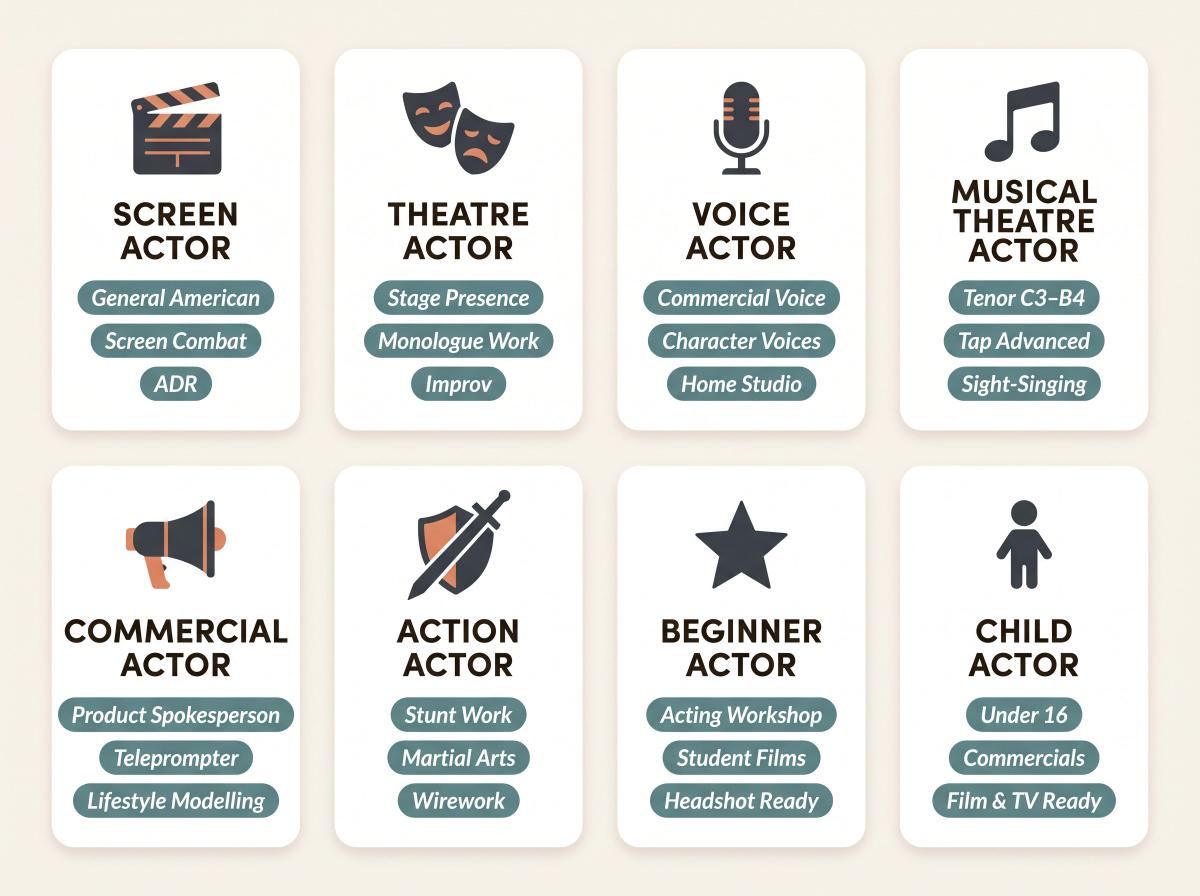
Acting Resume Special Skills Examples by Actor Type
These are complete examples, not a starting point. Adapt them based on your real skills. If you want to see how these examples translate into a full formatted document, the resume examples library has templates across dozens of professional contexts you can adapt as a starting point.
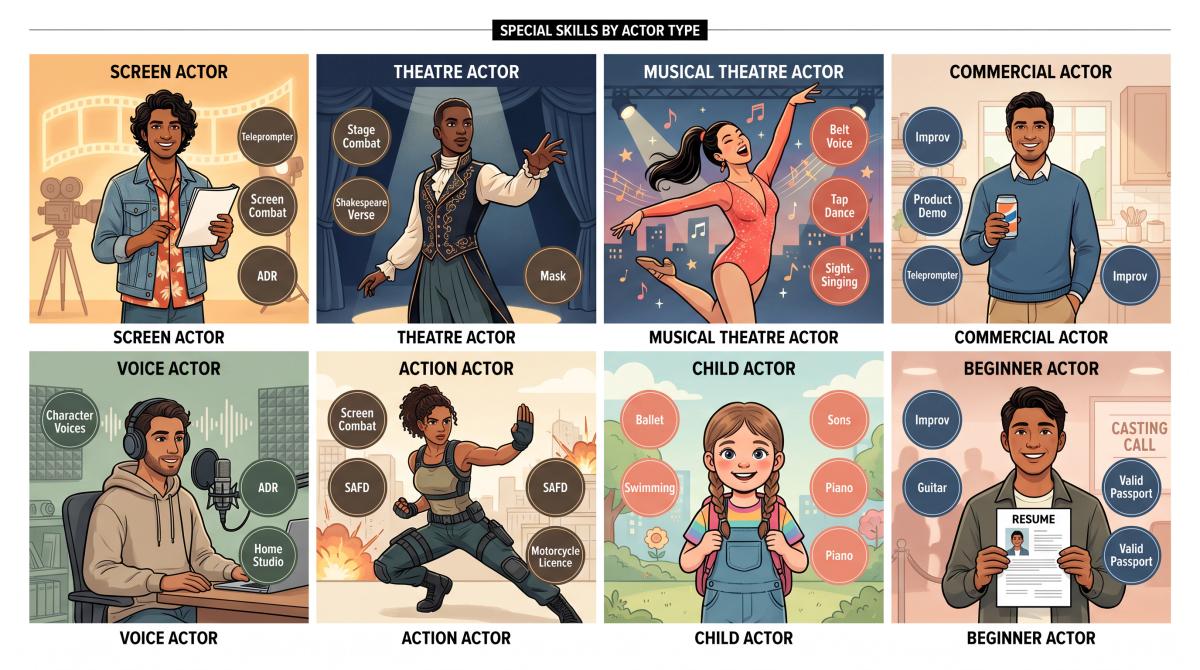
Beginner Actor
Special skills: Spanish, conversational; guitar, intermediate; football, competitive; swimming, advanced; improv, beginner; teleprompter; valid passport.
This works because it gives casting usable information without claiming credentials the actor doesn't have.
Screen Actor (Film and TV)
Special skills: general American accent; RP; Spanish, fluent; screen combat, unarmed, intermediate; boxing, intermediate; manual driving; teleprompter; ADR; green screen.
Theatre Actor
Special skills: stage combat, unarmed and rapier; heightened RP; Shakespeare verse; baritone, G2–A4; period dance, basic; mask; puppetry; piano, beginner.
Musical Theatre Actor
Special skills: tenor, C3–B4; belt to A4; tap, advanced; jazz, advanced; ballet, intermediate; sight-singing; harmony; piano, basic; dance captain experience.
Commercial and UGC Actor
Special skills: teleprompter; handheld product demo; improv; yoga, intermediate; cycling; dog handling; barista, 3 years; Spanish, conversational; clean driving licence.
Voice Actor
Special skills: commercial voiceover; character voices; ADR; audiobook narration; RP; general American; French accent; Spanish, conversational; singing, alto; home studio setup.
Action / Physical Actor
Special skills: screen combat; boxing; judo; falls; SAFD unarmed; motorcycle licence; manual driving; rock climbing; swimming, advanced; theatrical firearms safety training.
Child Actor
Special skills: ballet, beginner; swimming, intermediate; piano, beginner; gymnastics, intermediate; bike riding; soccer; basic Spanish; reads at advanced level.
For children, keep it factual and parent-verified. Don't oversell. Safety is the primary concern.
How to Audit Your Acting Resume Special Skills (7 Steps)
Run through this before your next submission, profile update, or agent meeting.
1. Write every possible skill. Dump everything first: languages, sports, instruments, jobs, hobbies, licences, movement, voice, tech, performance, physical skills. Get it all out before you filter.
2. Delete anything you can't perform tomorrow. Be brutal. If you need two weeks to remember how to do it, it doesn't belong on the printed resume.
3. Sort by casting value. Ask: Does this help me get cast in roles I actually want? Is it rare? Is it useful on set? Can it be searched on a casting platform? Can I prove it with a clip?
4. Add levels. Never make casting guess. Write beginner, intermediate, advanced, fluent, conversational, native, certified, licensed, or professional.
5. Rewrite vague entries.
- Dance → jazz, intermediate; ballet, beginner
- Accents → general American, RP, native Liverpool
- Singing → alto, F3–D5; harmony
- Sports → tennis, competitive, 6 years
- Horse riding → English saddle, walk/trot/canter, intermediate
- Guitar → rhythm guitar, intermediate; reads chord charts
6. Update your casting profiles, not just the PDF. Update Actors Access, Casting Networks, Spotlight, Casting Workbook, or whichever platform your market uses. Fill in the skills fields directly. Don't assume casting will open your PDF.
7. Film proof clips for your top three castable skills. Casting Networks' profile guidance specifically allows actors to attach media clips to individual skills. Aim for 20–30 seconds: 20 seconds of you playing piano, 30 seconds of tap combination, 20 seconds of general American accent in a scene, 30 seconds of teleprompter hosting. Don't make it long. Casting wants confirmation, not a documentary. Once you've updated your casting profiles, you can use AIApply's AI resume scanner to check the parallel general-job version of your resume against ATS filters before submitting to any non-acting roles.
Which Special Skills Are Worth Learning for Actors
Don't panic if your current skills section is sparse. Pick based on your casting lane. And if you're thinking about longer-term career development alongside your acting work, the adult education instructor career guide is a useful read. Many actors build sustainable income teaching the skills they've spent years mastering.
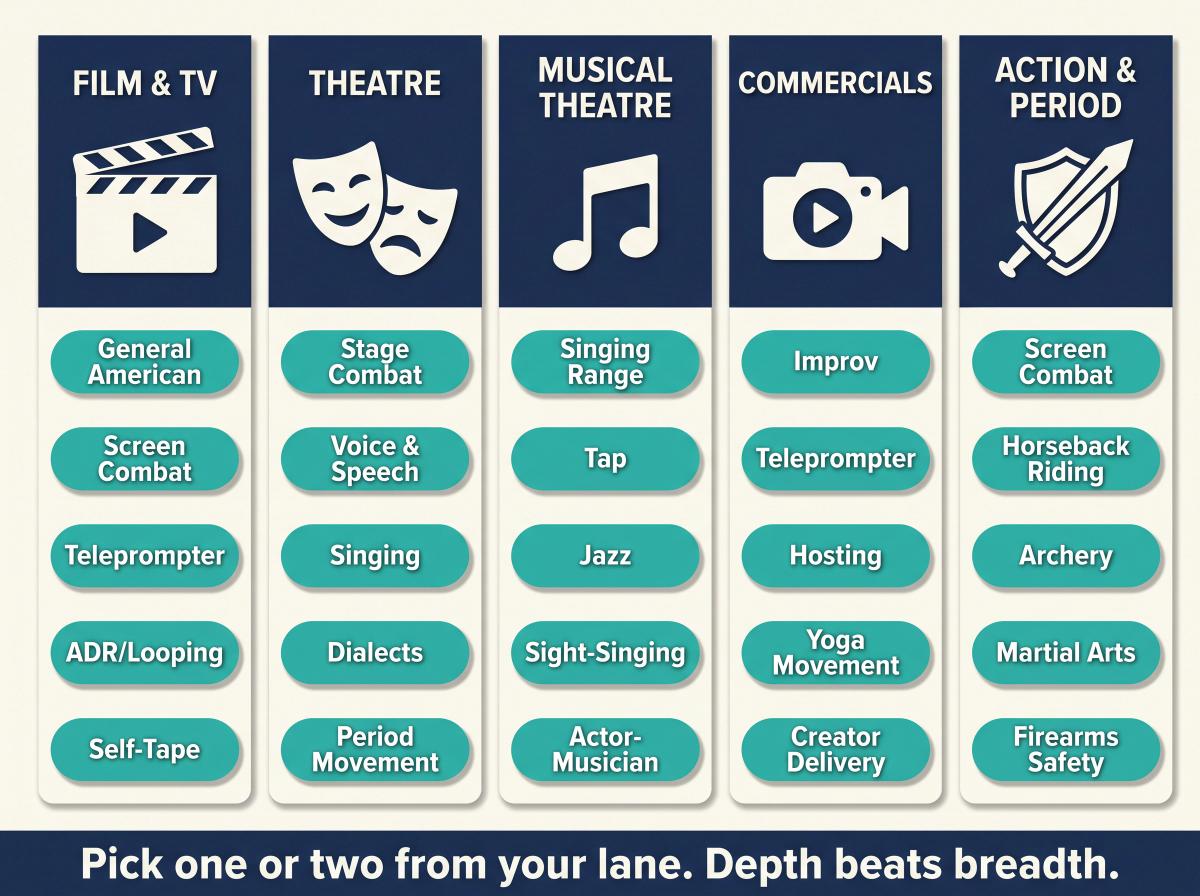
For film and TV roles: General American or RP (depending on market), screen combat basics, teleprompter, ADR/looping, driving (manual, if relevant), one sport or movement discipline, self-tape technical basics.
For theatre: Stage combat, voice and speech, singing (even basic), dance or movement, dialects, puppetry or mask, period movement.
For musical theatre: Singing range and repertoire, tap, jazz, ballet basics, sight-singing, harmony, an actor-musician instrument if relevant. Our guide on how to start a music career covers how professional musicians build their performing credentials from scratch. Useful context if you're expanding into actor-musician territory.
For commercials: Improv, teleprompter, product demo, hosting, yoga or fitness movement, dog handling (if genuine), a conversational second language, creator-style camera delivery.
For action, fantasy, period, or crime roles: Screen combat, stage combat, horseback riding, archery, boxing or a martial art, firearms safety for performance (not casual shooting), driving or motorcycle skills (if licensed), specific accent or two.
Pick one or two from the relevant lane. Don't become a collector of half-skills that don't get past the beginner level. Understanding what transferable skills actually are, and how to frame the ones you've built through acting for non-acting employers, is the clearest way to use your full range on both types of resume.
How to List Safety-Sensitive Skills on an Acting Resume
Some skills carry real risk. These need extra honesty in how you present them, because understating or overstating either creates a problem.
Safety-sensitive skills include:
Stage combat, screen combat, weapons, firearms, horseback riding, motorcycles, driving vehicles, stunts, aerial work, fire performance, diving, swimming (open water vs. pool), animal handling, climbing, and martial arts.
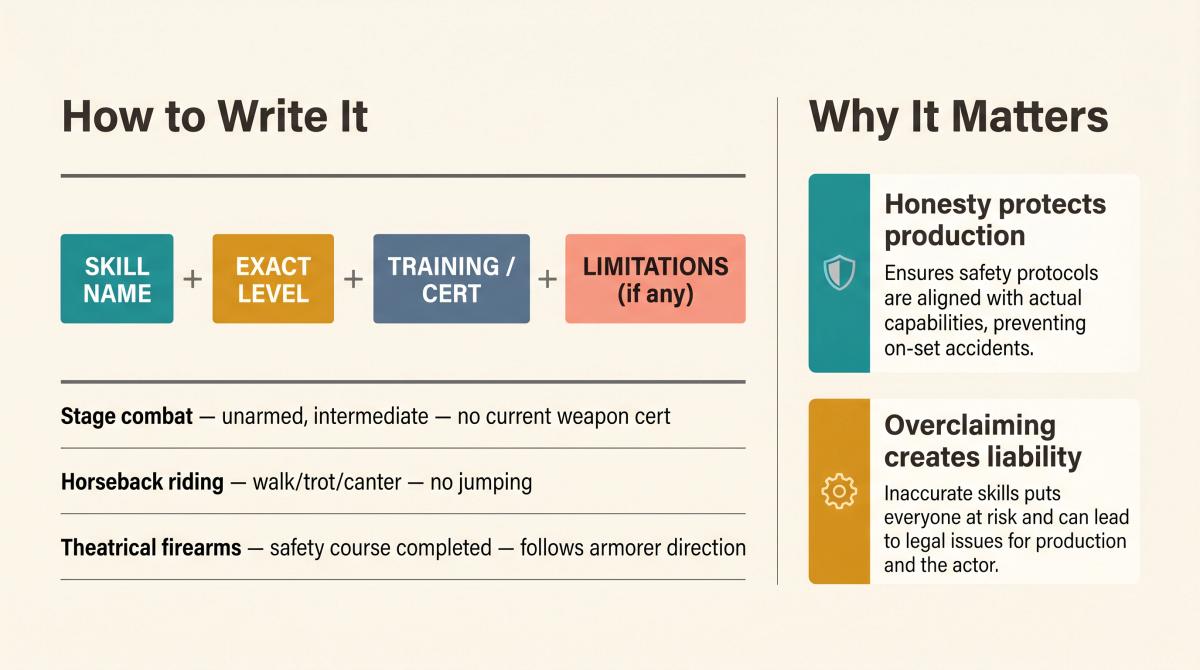
The format for these entries: Skill + exact level + training/certification + limitations if needed
Examples:
- Horseback riding, walk/trot/canter; no jumping
- Swimming, advanced pool swimming; not scuba certified
- Stage combat, unarmed, intermediate; no current weapon certification
- Motorcycle, licensed, road experience; no stunt riding
- Aerial silks, beginner; trained studio setting only
- Theatrical firearms, safety course completed; follows armorer and property master direction
That last part matters. The AEA's theatrical firearms guidance is clear: actors should be honest if they lack knowledge and should not overstate their qualifications. The armorer's job is to train actors. Let them do it. Your job is to tell the truth upfront.
Acting Resume Special Skills Templates (Copy and Use)
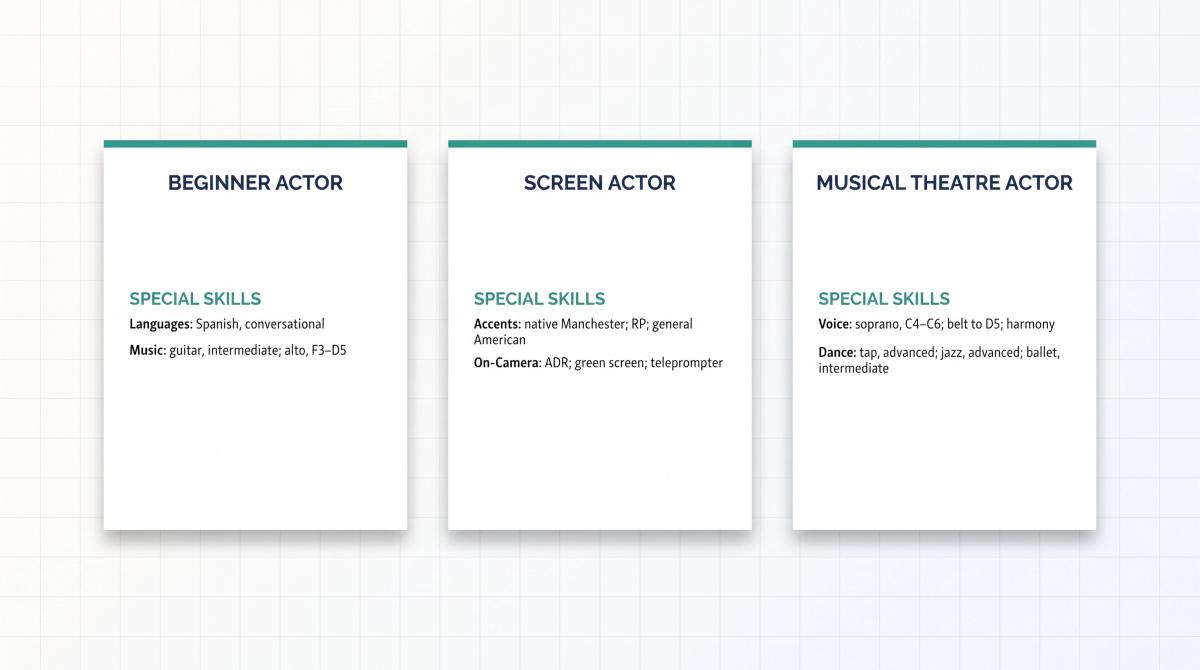
Two formatting options work for printed resumes.
Option 1: Category Format (Best for a Full Skills List)
| SPECIAL SKILLS Languages: Spanish, fluent; French, conversational Accents: native Yorkshire; general American; RP; Dublin Voice/Music: baritone, G2–A4; guitar, intermediate; sight-reading, basic Movement: stage combat, unarmed and rapier; ballet, intermediate; football, competitive On-Camera: teleprompter; ADR; green screen; handheld product demo |
Option 2: Compact Line Format (Best for Limited Space)
| Special skills: Spanish, fluent; general American accent; baritone, G2–A4; guitar, intermediate; unarmed stage combat; football, competitive; teleprompter; ADR. |
Template: Beginner Actor
| SPECIAL SKILLS Languages: Spanish, conversational Accents: general American, working; native London Music: guitar, intermediate; alto, F3–D5 Movement/Sports: football, competitive; swimming, advanced; yoga, beginner On-Camera: teleprompter; self-tape editing |
Template: Screen Actor
| SPECIAL SKILLS Accents: native Manchester; RP; general American; Dublin Languages: French, conversational; Spanish, basic scripted dialogue Combat/Movement: screen combat, unarmed; boxing, intermediate; falls, basic Vehicles: full clean UK licence, manual; motorcycle licence On-Camera: ADR; green screen; teleprompter; motion capture |
Template: Musical Theatre Actor
| SPECIAL SKILLS Voice: soprano, C4–C6; legit; belt to D5; harmony; sight-singing Dance: tap, advanced; jazz, advanced; ballet, intermediate; ballroom, beginner Music: piano, beginner; ukulele, intermediate Accents: RP; general American; cockney Movement: stage combat, unarmed, beginner |
Template: Commercial and UGC Actor
| SPECIAL SKILLS Hosting: teleprompter; handheld product demo; live event presenting Comedy: improv, intermediate; sketch Lifestyle: yoga, intermediate; cycling; dog handling Languages: Spanish, conversational Professional: barista, 3 years; cocktail service; food handling |
Template: Voice Actor
| SPECIAL SKILLS Voiceover: commercial read; narration; ADR; audiobook; character voices Accents: native Glasgow; RP; general American; Australian Languages: German, fluent; French, conversational Music: alto, F3–D5; harmony Technical: home studio; basic audio editing |
Printed resume: aim for 8–20 strong skills. Backstage's resume template places the special skills section after credits and training.
Casting profiles: add more, with proficiency levels and clips where possible. The platform's searchable fields do more work than the PDF.
Once your skills section is finalized, AIApply's resume builder can help you format both your acting resume and any general-purpose resume using the same core content, keeping them consistent and ATS-ready. If you need cover letters to accompany applications to non-casting employers, the AI cover letter generator tailors each letter to the specific job description.
Using Acting Skills on a Non-Acting Job Resume
Most working actors earn income from multiple sources. Day jobs, production roles, hospitality, admin, content creation, corporate work. It's not a compromise; it's how the industry actually works for most people.
The challenge is that your acting resume and your general job resume are fundamentally different documents. An acting resume is designed to be read by a casting director who already understands the format. A corporate or hospitality resume needs to pass through an Applicant Tracking System (ATS) first, an automated filter that screens applications before a human ever sees them.
If you're applying to non-acting roles alongside your acting career, AIApply's resume builder can help you build a clean, ATS-optimized resume for those applications. It uses AI to tailor content to specific job descriptions, supports multiple export formats, and is designed to pass the kinds of automated filters that casting platforms simply don't use.
For actors submitting to administrative, marketing, hospitality, or production-office roles, AIApply's resume scanner checks ATS compatibility and flags keyword gaps before you apply. It analyzes against 50+ ATS systems. Worth running before submitting to a corporate role, even if you're confident in your resume.
The distinction is important: use your casting profile and acting resume PDF for casting. Use AIApply when you need a separate, well-optimized document for the non-acting parts of your career. Our resume optimization techniques guide covers the key moves for making a resume pass ATS filters. The same skills that work for a casting profile need different framing for a corporate application.
Acting Resume Pre-Submission Checklist
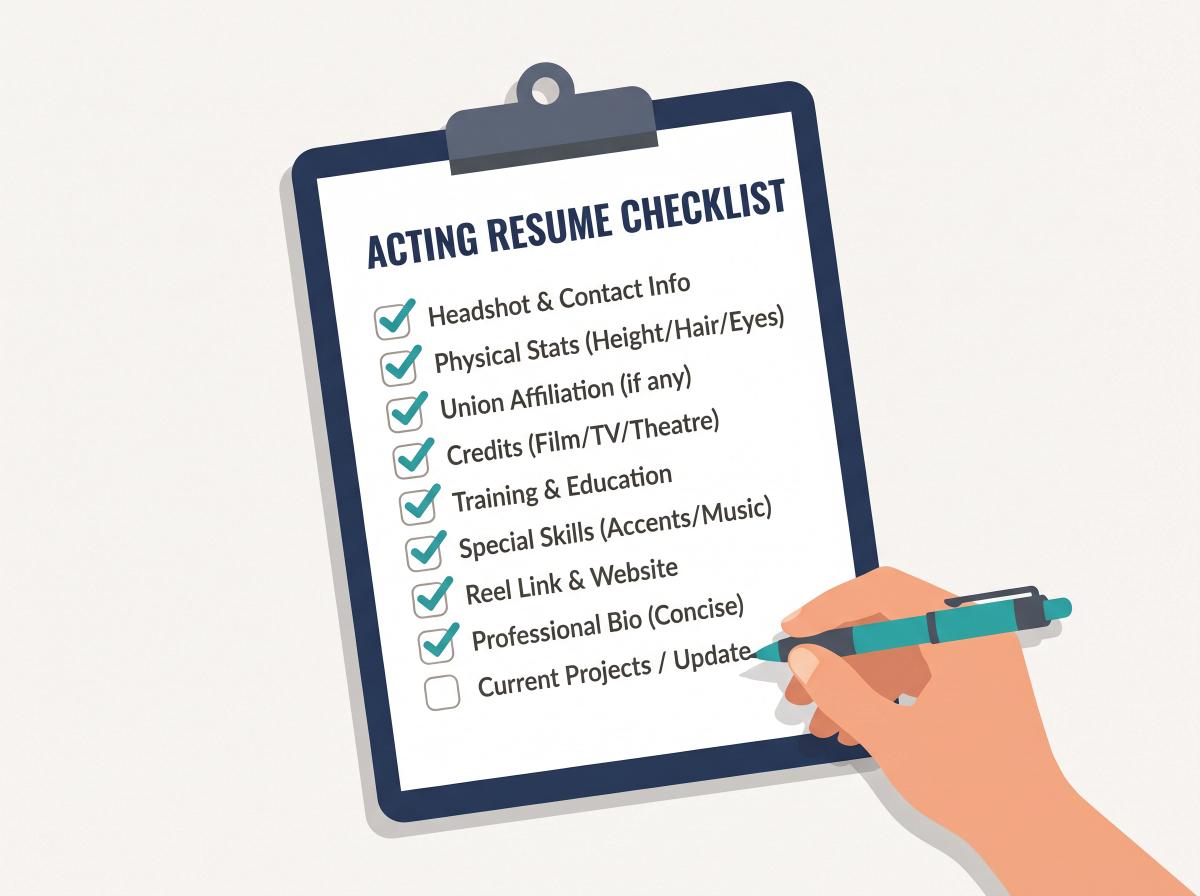
Before sending your resume or updating your casting profile, work through this:
- Is the special skills section at the bottom, after credits and training?
- Are skills grouped logically by category?
- Did you remove vague words like "athletic" and "good singer"?
- Did you add proficiency levels to each entry?
- Did you specify accents individually, not just "accents"?
- Did you include vocal range and voice type, not just "singing"?
- Did you specify dance styles and levels?
- Did you specify instrument types and reading ability?
- Did you avoid fake or rusty skills?
- Did you remove generic personality traits?
- Did you update your online casting profile fields (not just the PDF)?
- Did you attach or link a proof clip for your strongest skills?
- Did you handle safety-sensitive skills with the right specificity?
- Can you demonstrate every listed skill tomorrow?
If yes to all of these, your special skills section is doing its job. For a complete look at how the skills section fits into the overall document structure, our guide on resume format tips covers layout, ordering, and how to balance length across every section.
Frequently Asked Questions About Acting Resume Skills
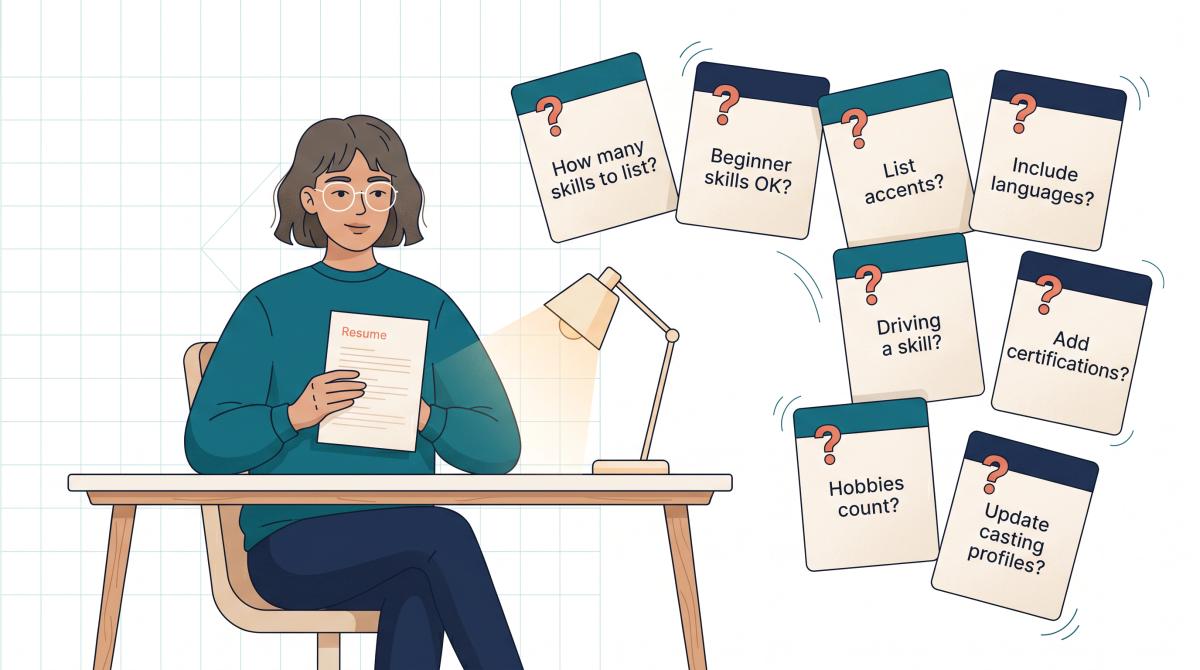
What Are Special Skills on an Acting Resume?
Special skills are abilities beyond your acting credits and training that could help production cast, stage, or shoot a role. They include accents, languages, singing, dance, instruments, stage combat, sports, horseback riding, driving, teleprompter, improv, and real-world professional experience. They're listed at the bottom of your resume and fill in the searchable fields on casting platforms. For a broader look at how to structure the full document, see our guide to resume optimization techniques, covering how each section works together to pass both human and automated review.
How Many Special Skills Should I List?
On a printed one-page resume, aim for 8 to 20 strong skills, depending on how much space you have after credits and training. On online casting profiles, add more, since casting directors and their assistants can search every field. Always mark proficiency levels honestly.
Should I List Beginner Skills?
Yes, if they're relevant and clearly marked as beginner. For safety-sensitive skills like combat, riding, firearms, aerial work, or stunts, be especially careful. Don't list something you can't demonstrate safely. "Ballet, beginner" is fine. "Stage combat, unarmed, beginner" is fine if you've done the training. "Horseback riding" without a level, when you rode once on holiday, is not.
Should I Put Accents on My Acting Resume?
Yes, if you can sustain them through a full scene and take direction in them. List specific accents: general American, RP, cockney, Dublin, Glasgow, southern US. Don't write "all accents." Spotlight recommends being realistic and including a voice clip where possible.
Should I Put Languages on My Acting Resume?
Yes. Use clear labels: native, fluent, conversational, basic, can learn lines phonetically, or can take direction in the language. Don't write "French" if you mean you took it in school. Conversational means you can hold a real, sustained conversation and respond to unexpected direction. If you've taught the language professionally, the ESL teacher resume example shows how language instructors document this kind of proficiency for general employers.
Is Driving a Special Skill for Actors?
It depends on your market. In the UK, Spotlight includes a driving licence in the searchable skills fields on actor profiles, so it's worth including. In the US, a standard licence is often not worth the space on a one-page resume, but manual/stick shift, motorcycle, van, boat, or specialist vehicle skills are. List what's specific and useful.
Should I Include Certifications on My Acting Resume?
Yes, when they prove safety, competence, or professional level. Include certifications for stage combat (SAFD SPT, APC), firearms safety for performance, scuba (PADI), lifeguarding, driving categories, motorcycle licence, pilot licence, first aid/CPR, personal training, yoga instruction (200 RYT, 500 RYT), dance teaching, martial arts belts, and relevant medical qualifications. Format: Stage combat: SAFD SPT, unarmed and rapier, current. For medical roles, see how medical technologist resumes handle credential documentation. The same precision applies.
Can I Lie About Special Skills?
No. Lying damages your reputation and creates real safety problems on set. This is especially serious with riding, weapons, combat, driving, stunts, animals, and languages. A production that relies on your stated skill and finds out you can't deliver wastes time and money, and in a small industry, that word travels. Don't do it.
Should I Include Hobbies in the Special Skills Section?
Only if they're specific, uncommon, and genuinely useful for casting. "Reading" is not useful. "Competitive chess player" might be worth a line for specific productions. "Likes cooking" is weak. "Professional pastry chef, 4 years" is a real entry. The test: would this skill be useful in an actual role or on an actual set?
What About Unusual or Funny Skills?
Yes, if they're real and not distracting. Ventriloquism, speed cubing, taxidermy, medieval calligraphy, yo-yo tricks, competitive whistling, latte art, beatboxing, bird calls, balloon twisting, magic, juggling, unicycle, drag performance, and yodeling are all genuine entries that have opened conversations in casting rooms. A strange skill that's real can be memorable. A fake quirky line makes you look unserious.
Should I Include Creator or Social Media Skills?
Yes, if they're genuine and relevant. UGC, livestreaming, podcast hosting, and short-form content skills are increasingly relevant for commercial and branded content casting. Casting Networks now lists UGC as a distinct casting category. Don't list follower counts in the skills section unless the brief specifically asks for reach data.
Do I Need to Update My Casting Profiles Too?
Yes, and it's actually more important than the PDF. Casting platforms like Casting Networks, Spotlight, Casting Workbook, and Actors Access allow casting directors to search skills directly. If your proficiency levels and skills aren't filled into those fields, you won't appear in those searches even if you have the skill. Update the PDF and the profile. Don't assume casting will open the attachment. AIApply's AI resume checker can flag any structural or formatting issues in the general-job version of your document before it goes out alongside your casting submissions.
Final Thoughts on Building Your Acting Skills Section

Your special skills section should make a casting director think: this actor can solve a real production problem.
Not "this actor has hobbies." Not "this actor is trying to sound interesting." Not "this actor copied a skills list from the internet."
Keep it specific. Keep it honest. Keep it searchable. And wherever possible, prove it with a clip.
If you're managing a dual career alongside your acting work, AIApply has tools to help you build and optimize the corporate and hospitality resumes that run alongside your casting profile. Two separate documents, each doing the right job.