Best Time of Year to Apply for Jobs in 2026
The best time of year to apply for jobs: Jan-Feb, April-June, and Sept-Oct. This 2026 guide tells you exactly what to do in each window.


If you're wondering whether now is a good time to apply for jobs, the answer is almost always yes. The catch is that some windows are significantly stronger than others, and most people time their search around the wrong ones. Should I wait until January? Is summer pointless? Did I miss the window? Those are the questions we hear most.
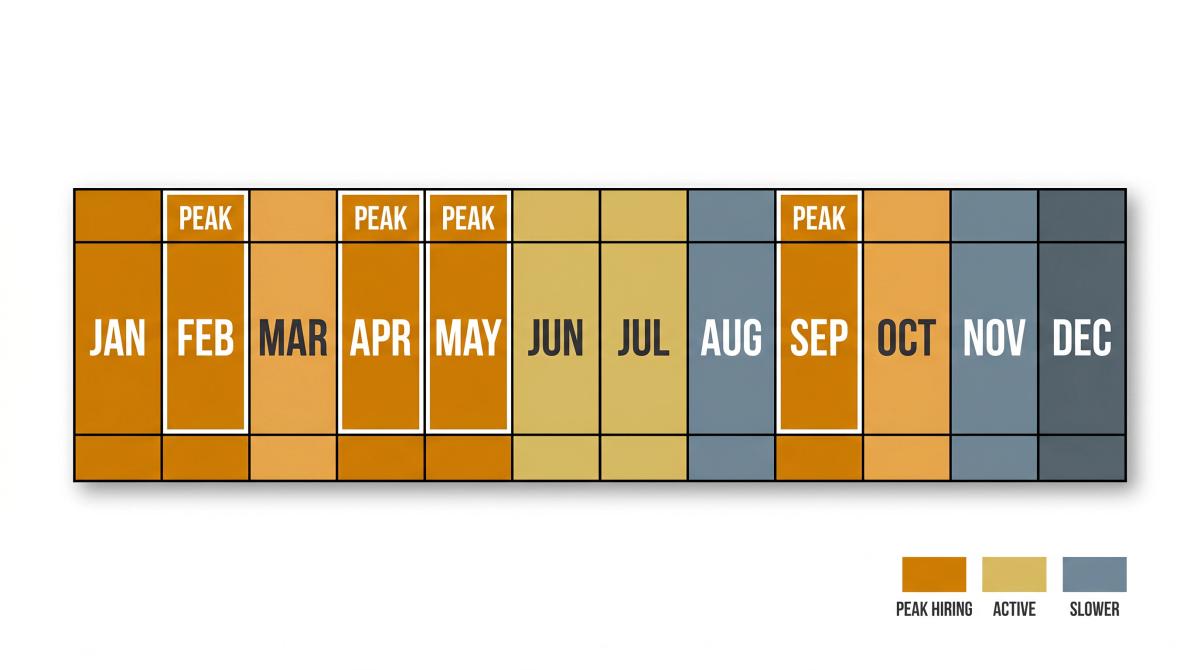
The best time of year to apply for jobs comes down to three windows when most professional hiring actually happens: late January to February, April to June, and September to October. These are the months when companies have approved budgets, hiring managers are available, and job boards are genuinely active with real openings.
If you're reading this in May 2026, you're already inside one of the strongest hiring windows of the year. Don't wait for September. LinkedIn Economic Graph research found that job postings typically peak from April through July, with May often the highest month across multiple countries and markets.
At AIApply, we've helped over 1.1 million job seekers work through timing, competition, and application strategy. The pattern we see consistently: the candidates who combine the right timing with the right application quality get results. Neither alone is enough.
By the end of this guide, you'll know which months matter most, what to do in your specific situation (whether you're unemployed, a student, switching careers, or casually looking), and how to act on a fresh job posting the moment it goes live.
Why the job market is seasonal
Job searching feels deeply personal. Hiring, on the other hand, is mostly a business rhythm.
Companies hire when a specific set of conditions lines up: approved budget, a clearly defined role, a hiring manager with capacity to interview, and urgency to fill the gap. When those four things don't all align at once, hiring slows, regardless of how many great candidates are out there.
That's why the job market has predictable seasons.
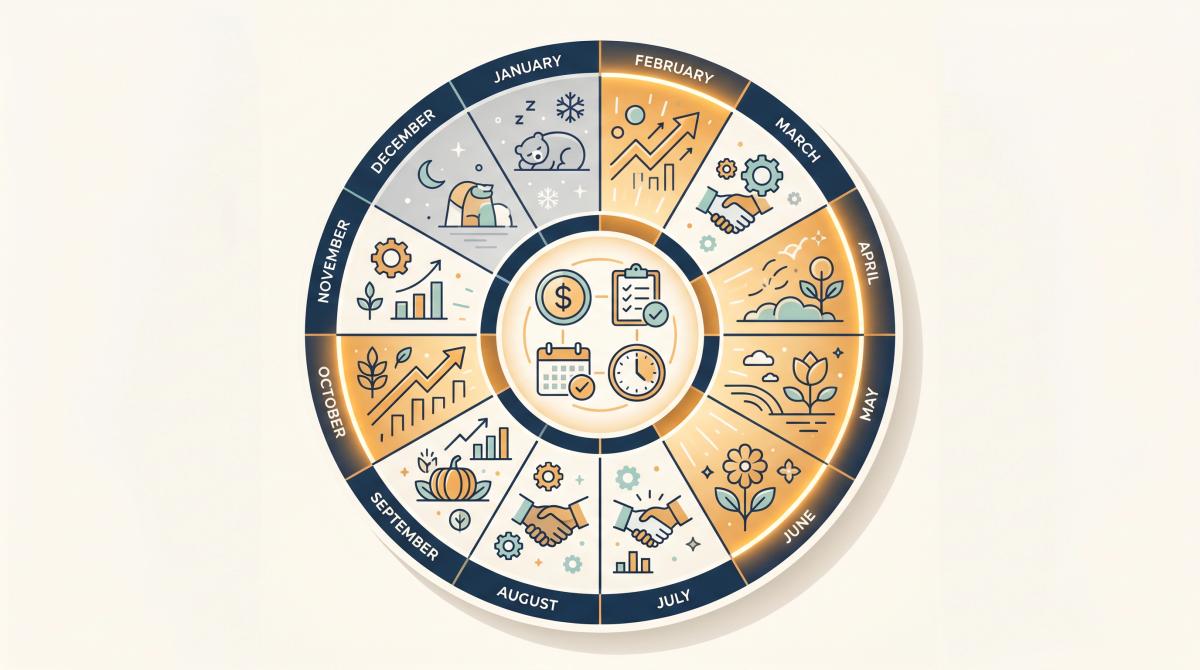
January feels active because companies start the year with fresh headcount budgets. February is often stronger because people are fully back from the holidays and interviews actually start moving. Spring is strong because teams want new hires in place before summer vacations slow down decision-making. September and October are strong because the summer is over, teams know what they're still missing, and there's enough time left in the year to complete a hire.
The deeper rule: the best time to apply is when the role is fresh, the company has urgency, and your application is tailored enough to survive the first screen. That matters more than any magic month, weekday, or time of day.
December tends to be the slowest because approvers, hiring managers, and recruiters are often away, budgets are closing, and many candidates have already stepped back. But even December isn't useless, as we'll get to shortly.
What the 2026 job market looks like right now
The 2026 job market is active but competitive: the US has roughly 6.9 million open positions as of March 2026, while the UK has seen vacancies fall to their lowest level since 2021. In a market like this, timing and targeting both carry real weight. Timing advice is only useful if it maps to the current market reality, so here's what's actually happening in 2026.
In the US, hiring is still active. The Bureau of Labor Statistics' April 2026 employment report showed 115,000 nonfarm payroll jobs added that month, with unemployment at 4.3%. Growth was strongest in healthcare, transportation, and retail. Federal government employment continued to contract. Job openings data from March 2026 showed approximately 6.9 million open positions and 5.6 million hires, meaning there are still millions of real opportunities out there.
The UK picture is more cautious. The Office for National Statistics reported 711,000 vacancies for January to March 2026, down 29,000 from the previous quarter and the lowest level since early 2021. UK unemployment sat at 4.9%. CIPD, the UK professional body for HR, reported in its winter 2025/26 outlook that employer hiring intentions were at historically low levels outside the pandemic period, with a net employment balance of just +7.
Globally, ManpowerGroup's Q2 2026 employment outlook survey of more than 41,000 employers across 42 countries found a net global employment outlook of 31%, up slightly from the previous quarter. The strongest results were in India, the UAE, and Brazil. Information technology and finance/insurance showed relatively strong sector outlooks.
The 2026 takeaway: timing matters, but targeting matters more. The job market isn't equally strong across every sector, geography, or role type. The strongest candidates aren't just applying in the right month. They're applying to the right roles, quickly, with job-specific resumes and cover letters.

The best months to apply for jobs in 2026
Here's the full calendar. The months aren't created equal, and knowing why certain ones work helps you adjust your expectations.
January: good for starting, better after the first week
January has a reputation as the peak job-search month because companies open the year with new budgets and new headcount plans. That reputation isn't entirely wrong, but the first week of January can be chaotic: people are catching up on emails, teams are still aligning, and many decisions haven't been made yet.
By mid-to-late January, hiring starts to become real. Budgets are confirmed, requisitions are open, and recruiters start working their pipelines.
Best move: Refresh your resume, set job alerts, reconnect with your network, and start applying as soon as quality roles appear. Don't sit out the first half of January, but don't expect instant momentum either.
One thing to watch: LinkedIn found that job seekers apply most heavily from January through May, so January can be competitive at the same time it's active. Volume on your end needs to come with quality.
February: one of the best months for corporate jobs
February often outperforms January because the machinery is fully running. Budgets are active, people are back, and companies that planned January hiring need to show progress before Q1 disappears.
This is a strong month across a wide range of roles:
- Corporate and professional services roles
- Tech, product, and engineering roles
- Sales and marketing roles
- Finance, accounting, and operations roles
- Project management roles
Best move: Apply aggressively, but don't spray generic applications. Fresh postings, referrals, and tailored resumes are what separate you from the January crowd that's still running the same generic resume.
March: strong follow-through month
March is usually a strong continuation of the January/February hiring cycle. By now, some roles have been posted for weeks.
That's important to watch. A job posted yesterday deserves your fastest effort. A job posted 45 days ago might still be open, but it could also be paused, deep in interviews, or quietly dead. Prioritize fresh roles first.
Best move: Follow up on February applications, keep applying to new postings, and widen your search slightly if your response rate is low.
April: one of the strongest months of the year
April is consistently underrated. Companies are past Q1 planning, teams know what they need, and there's still enough time to complete a hire before summer vacations slow decision-making down.
LinkedIn's labor-market seasonality research found that job postings tend to peak from April through July across many markets. That makes April the start of the spring hiring surge.
Best move: Treat April like peak season. Tighten your resume, apply early to new roles, and use networking to get ahead of public applicant pools.
May: still excellent, especially right now
May is not "too late." For most job seekers, it's one of the best months to apply, and the data backs that up.
LinkedIn's seasonality analysis found that May is often the highest posting month depending on the country and market. That means candidates who are ready to move quickly in May can hit the year's peak posting volume.
May is also important for students and graduates. NACE's April 2026 spring update found that employers expected to hire 5.6% more new college graduates from the class of 2026 than the class of 2025. Spring recruiting now accounts for roughly 37% of full-time hires and 27% of intern hires, making it nearly as important as the traditional fall cycle. If you're one of the students and graduates applying this season, May is your moment.
Best move: Apply now. Don't wait for September unless your target industry clearly hires later.
June: good, but move early in the month
June can still be strong because posting volumes are often high. The risk is on the interview side: scheduling can start to slow as vacations begin, especially in Europe and at companies with summer-heavy office cultures.
Good month for: roles already in process, internships, seasonal work, education-related roles, and companies trying to complete hiring before summer.
Best move: Apply early in June rather than waiting for the latter half. Follow up clearly and expect some scheduling delays.
July: mixed, not dead
July is an interesting month. LinkedIn's data shows postings can stay high into July, but decision makers may be away, particularly in markets where summer vacations are cultural. You can find roles, but interview loops may drag.
Use any slower pace to your advantage. The candidates who make the strongest impression in September often did their best prep work in July.
Best move: Keep applying to fresh jobs, but use any slower pace to improve your resume, LinkedIn profile, portfolio, and interview answers.
August: often slower, but genuinely useful
Many candidates stop applying in August because they assume nothing is happening. In some markets, that's partially true: LinkedIn found that job postings tend to decline in August because of vacations.
September is coming. If you prepare properly in August, you can hit the fall hiring wave before everyone else wakes up.
Best move: Build your target-company list, update your resume, set alerts, and start applying to late-August roles that are likely to move quickly after the summer.
September: one of the best months to apply
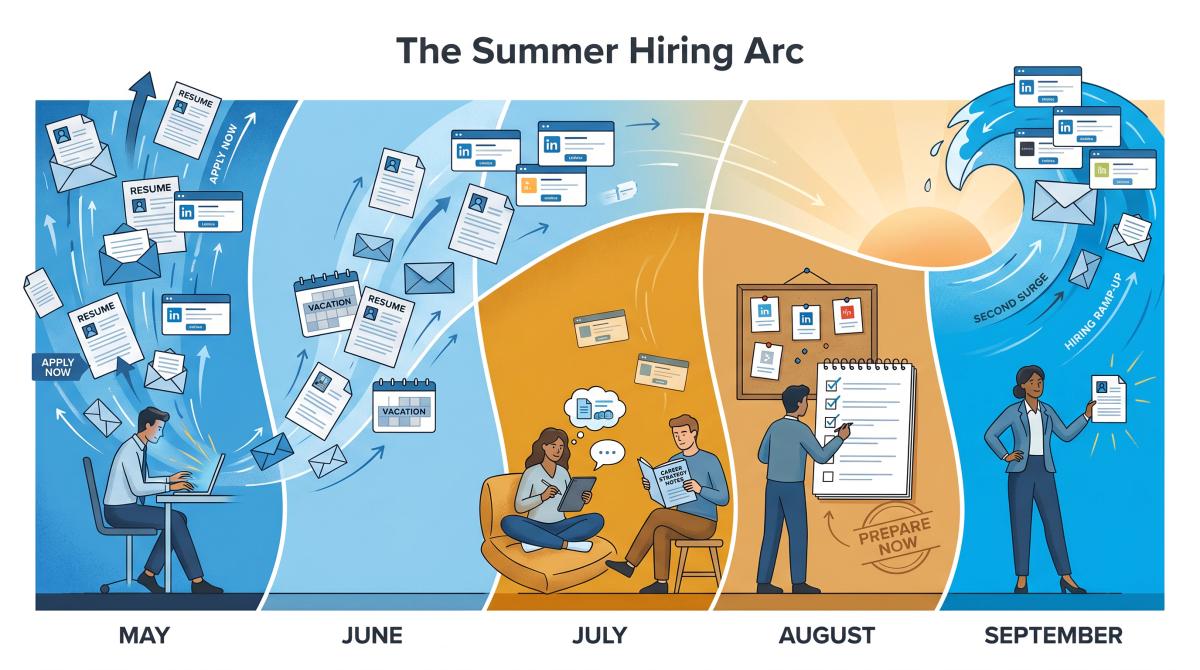
September is a major second hiring wave, and one of our favorite months for a candidate reset.
People are back from summer, teams have a clear view of what they're still missing, and companies still have enough calendar left to complete a hire before year-end. LinkedIn found a distinct second posting peak around September and October in countries including the US, UK, Canada, Australia, and Sweden.
→ Professional services, tech, sales, marketing, and operations roles surge in September
→ Graduate recruiting restarts with urgency after the summer break
→ Roles that were delayed over summer reopen and need to close quickly
Best move: Apply quickly to new postings and restart conversations that stalled in summer. Recruiters are fresh off vacation and often motivated to fill pipelines.
October: strong, but time starts to matter
October is still a strong hiring month, but the year-end clock is visible. Companies that want someone in a seat before December need to move, and they know it.
Candidates who can interview quickly, give clear start-date availability, and show strong fit tend to have the best October outcomes.
Best move: Target roles where urgency is obvious: backfills, revenue-generating roles, operational roles, and teams trying to close out the year strong.
November: slower, but not pointless
November is mixed. Some teams are still actively hiring, but holidays, budget planning, and year-end reviews can slow decisions. Cold applications alone won't cut it.
Best move: Lean more heavily on networking and recruiter outreach. Informational calls and reconnections in November often pay off in January offers.
December: the slowest month, with hidden advantages
December is typically the slowest month for job applications and hiring decisions. LinkedIn found that applications hit their lowest point in December, and hiring and job transitions drop sharply before rebounding in January.
But two things work in your favor:
① The competition thins out. Many candidates stop applying entirely, which means a solid application stands out more.
② Urgent roles still exist. Some companies need to fill positions before January, and others post roles in December specifically so interviews can begin in the new year.
Best move: Don't disappear. Apply selectively to fresh and urgent roles, network, prepare your materials, and set yourself up for a fast January launch.
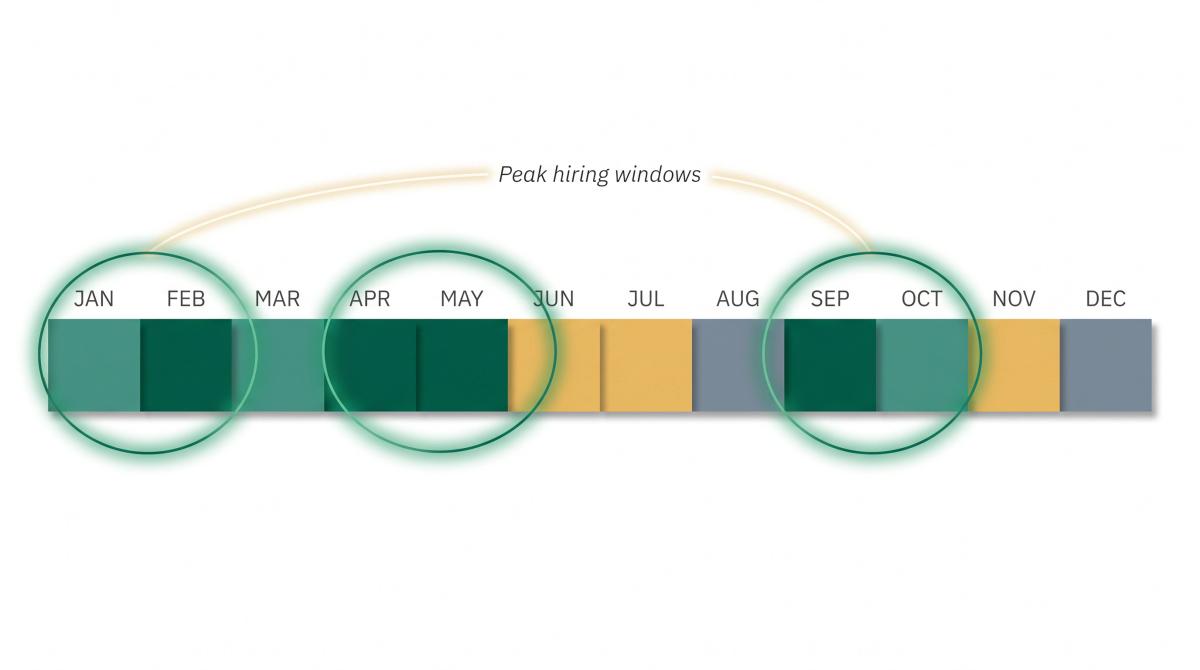
Summary: month-by-month calendar
| Month | Overall Rating | What's Happening | Best Move |
|---|---|---|---|
| January | Strong | Budgets reopen; early-month momentum can be slow | Prepare fast; apply from week two onward |
| February | Very Strong | Interviews and decisions move properly | Apply heavily to fresh roles |
| March | Strong | Q1 hiring continues | Follow up and keep targeting new postings |
| April | Very Strong | Spring posting volume rises | Treat it like peak season |
| May | Very Strong | Postings often peak; graduate hiring active | Apply now, especially to fresh roles |
| June | Good | Roles exist, but summer delays begin | Apply early; expect slower scheduling |
| July | Mixed-Good | Postings may stay active; managers may be away | Keep applying; improve materials |
| August | Mixed | Vacation slowdown in many markets | Prepare for September; catch late-summer postings |
| September | Very Strong | Second major hiring wave | Apply aggressively; revive old leads |
| October | Strong | Companies rush before year-end | Target urgent roles |
| November | Mixed | Holidays and budget planning slow some teams | Network; apply selectively |
| December | Slower | Lowest application activity; fewer decisions | Prepare, network, apply to urgent/fresh roles |
When to Apply After a Job Is Posted: The Timing Rule That Matters More Than the Month
Knowing the right month is only half the equation. The other half is knowing how quickly you move once a specific job goes live.
Career experts quoted by Business Insider in April 2025 agreed that earlier applicants consistently have an advantage. The recommendation was clear: apply very soon after a job alert, within the first few days at most, but don't sacrifice quality for speed.
Here's a practical guide:
| Time Since Job Was Posted | What to Do |
|---|---|
| 0–24 hours | Ideal window if you can tailor properly |
| 1–3 days | Still excellent |
| 4–7 days | Still worth it for a strong fit |
| 1–2 weeks | Apply if the match is good; expect more competition |
| 3+ weeks | Check if the role still looks active; prioritize fresher jobs first |
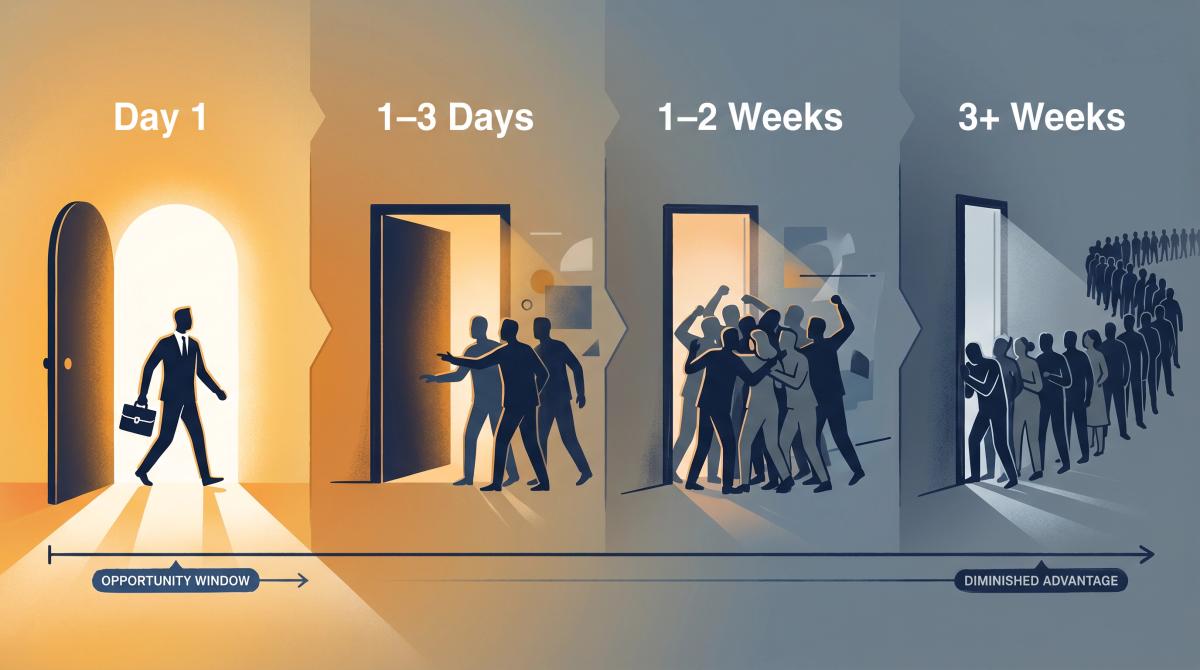
The best system is to set alerts, check them daily, and keep a base resume ready for each role type you're targeting. When a strong posting hits, you shouldn't be starting from a blank page.
This is where tools like our Resume Builder and Cover Letter Generator make a real difference. You can scan a job description, tailor your resume to match it, generate a job-specific cover letter, and submit. All without losing the first 48-hour advantage to formatting and rewriting.
The best time to apply based on where you are
The best time to apply for jobs depends on your situation: if you're unemployed, apply immediately regardless of season; if you're employed, you have the luxury of targeting peak windows; and if you're a student, you need to start earlier than feels natural for competitive programs. Timing advice isn't one-size-fits-all, and your situation changes which windows matter most and what "good timing" looks like in practice.

If you're unemployed or recently laid off
Apply now. Don't wait for January, September, or any other "best" month.
Your job search should run on two tracks at once:
Track one: Apply to fresh roles today, especially where your experience is a close match. Don't wait for peak season.
Track two: Use the stronger hiring windows to increase volume and networking.
If you're unemployed in May, July, or December, the answer isn't "wait." The answer is "apply now, but adjust your tactics by season." In slower months, networking and recruiter outreach matter more than cold applications. In stronger months, fresh job postings deserve your fastest, sharpest effort.
If you're employed and casually exploring
You have something most job seekers don't: the luxury of timing.
Your best windows are typically February to March, April to June, and September to October. Use the month before each window to prepare: update your resume, refresh your LinkedIn profile, and think through what you actually want.
For example, use August to do the quiet prep work, then enter September ready to move. That preparation gap is often what separates candidates who get fast responses from those who are still polishing their resume two weeks after a role goes live.
If you're a student or new graduate
Your timeline depends heavily on your country and the type of employer you're targeting.
In the US, spring recruiting has grown significantly in recent years. NACE's April 2026 update found employers expected to hire 5.6% more graduates from the class of 2026, with roughly 37% of full-time hires and 27% of intern hires now coming from spring recruiting cycles. Don't assume fall is the only window. Whether you're a student navigating your first job search or building your application materials, AIApply's student resources are designed for exactly this stage.
In the UK, graduate scheme timelines can catch people off guard. The National Careers Service notes that recruitment often starts from summer onward, with many schemes advertised between September and November. Prospects echoes this: many applications open in September or October for starts the following summer, and rolling schemes can close once places are filled, often well before the official deadline.
Start earlier than feels natural. "I'll apply after exams" is often too late for competitive graduate schemes. Build your application materials now so you're ready the moment applications open.
If you're switching careers
Career switchers have a specific challenge that timing alone won't solve: you need to translate your existing experience into the language of the new role before you apply. That takes more than a revised job title.
A practical rhythm for career changers:
- December to January: Build your story, rewrite your resume to translate old experience into new-role language.
- February to March: Apply and network. Lead with cover letters more than traditional applicants do.
- April to June: Keep applying while posting volume is high.
- August: Prepare again before the fall wave.
- September to October: Apply aggressively with a refined pitch.
Cover letters matter more for career switchers than almost any other group. A good cover letter explains why the move makes sense and preempts the obvious recruiter question: "Why are they applying for this?" Our AI Cover Letter Generator is designed to build job-specific letters from your actual experience and the role description, which saves hours when you're pivoting across every single application.
If you're targeting remote roles
Remote jobs are less tied to local hiring calendars because the applicant pool is global. That cuts both ways: you can find remote roles year-round, but you're also competing with a much larger pool of candidates.
For remote jobs, speed and relevance matter more than the month.
Your best strategy:
- Set alerts for exact job titles, not broad categories.
- Apply within the first few days of a posting.
- Tailor your resume to show remote-work proof: async communication, self-management, cross-timezone experience.
- Don't just express interest in remote work. Demonstrate it.
If you're applying for senior or executive roles
Senior hiring is less seasonal and far more relationship-driven. Many executive and senior-level roles are never publicly posted. By the time a VP or director role appears on LinkedIn, the shortlist may already be half-formed from referrals.
The most useful windows are January to March (when strategy and budgets are fresh) and September to October (when companies revisit leadership gaps before year-end). But the most useful habit is building conversations before jobs are posted, not waiting for the listing.
Best time to apply for jobs by industry
The best time to apply for jobs varies significantly by industry: tech and finance peak in January to March and September to October, healthcare hires year-round, retail and hospitality surge before summer and the holidays, and education follows the academic calendar. Industry hiring patterns don't all follow the same rhythm, so here's how the main sectors differ.
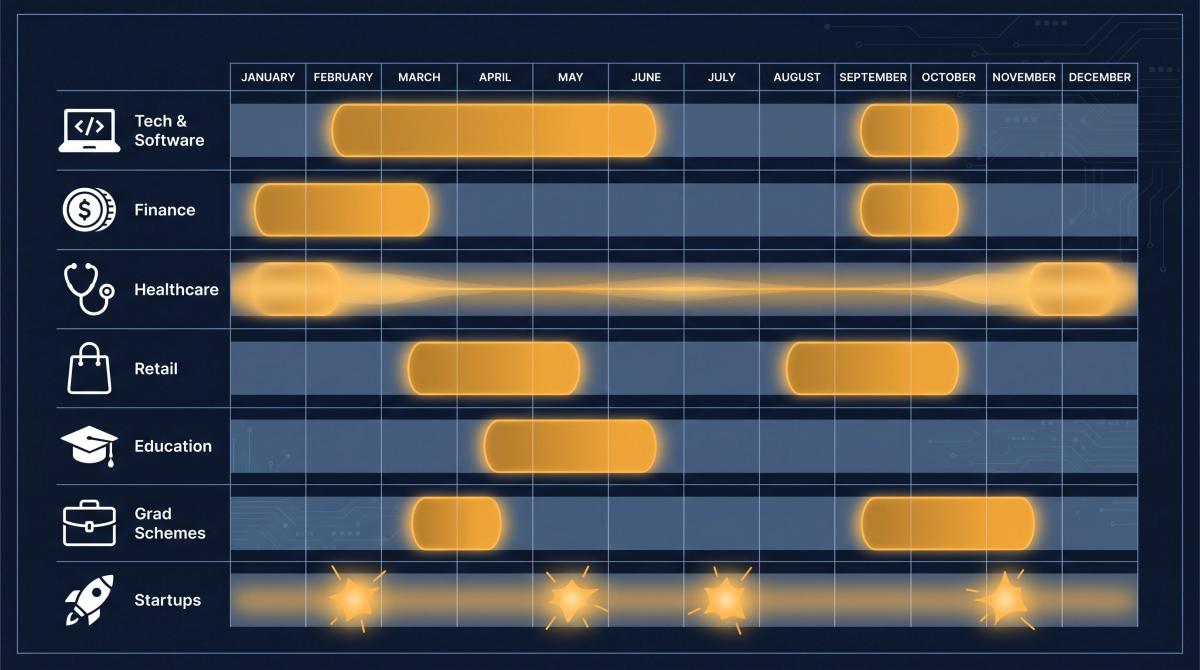
Tech, Software, Product, and Data: Best months are February through June and September to October. Startups and scaleups move differently from large companies, so watch for funding announcements and product launches as signals. In 2026, ManpowerGroup's Q2 survey showed information technology with one of the stronger global net employment outlooks, though hiring varies sharply by geography and company size. A generic software engineer or product manager resume gets buried fast: tailor hard for each application.
Finance, Insurance, and Accounting: Best months are January to March and September to October. Finance showed a relatively strong Q2 2026 hiring outlook in ManpowerGroup's survey. Accounting has its own seasonal wrinkle: tax-heavy firms often hire ahead of busy season, which can mean opportunities even in months that are slower for other industries. Whether you're targeting a financial analyst position or an accounting role, check open listings now, because the window moves faster than most people expect. Browse financial analyst resume examples to see what hiring managers in this sector expect from top applicants.
Healthcare: Year-round, with local peaks. Healthcare is less seasonal than most office jobs because demand is constant. The Bureau of Labor Statistics projects healthcare occupations to grow much faster than average from 2024 to 2034, with roughly 1.9 million openings per year expected from growth and replacement needs. Don't wait for a magic month. Apply when roles open.
Retail, Ecommerce, and Hospitality: March to May for summer roles; August to October for holiday roles. BLS analysis of retail holiday employment found that several retail industries build employment through October, November, and December, then reduce seasonal staff in January and February. If you want holiday work, start looking in late summer, not November.
Education: Spring and summer, depending on the school calendar. Teaching roles often appear as schools plan for the next academic year. Research shows that teaching is actually an exception to the usual summer slowdown because schools may hire during summer months. For universities and research roles, deadlines can be much earlier. Always check the specific institution's calendar. If you're applying for teaching positions, our teacher resume examples show exactly what school hiring committees want to see.
Graduate Schemes and Internships: Late summer through autumn, plus spring. For UK structured graduate schemes, many applications open in September or October for roles starting the following summer, with rolling deadlines that can close early. Don't ignore spring either: NACE's data shows US spring recruiting has become a significant share of total college hiring.
Startups: Any time. Startups hire when they raise funding, land customers, lose employees, or hit growth targets. The best startup applications often come from warm outreach, not job boards. Watch for funding announcements, new product launches, expansion signals, and founder posts about hiring.
How AI is changing job search timing in 2026
The mechanics of hiring have shifted in ways that make timing even more consequential than it used to be.
SHRM's 2025 talent trends research found that 43% of organizations used AI for HR-related activities in 2025, up from just 26% in 2024. The top use case was recruiting, with common applications including resume screening, candidate search, and applicant communication.
At the same time, competition has intensified. LinkedIn reported in January 2026 that the number of applicants per open role in the US had doubled since spring 2022. 93% of recruiters planned to increase their use of AI in hiring in 2026. And 81% of job seekers had already used or planned to use AI in their search.
What this means practically: the first screen is faster and less forgiving than it was three years ago. A resume that doesn't closely match the job description may never reach a human reviewer. An application submitted two weeks after a posting may land after a shortlist is already forming.
The candidates who do well in this environment are fast and specific. They're not applying to 200 jobs with one generic resume. They're scanning each job description, tailoring their materials to it, and submitting early.
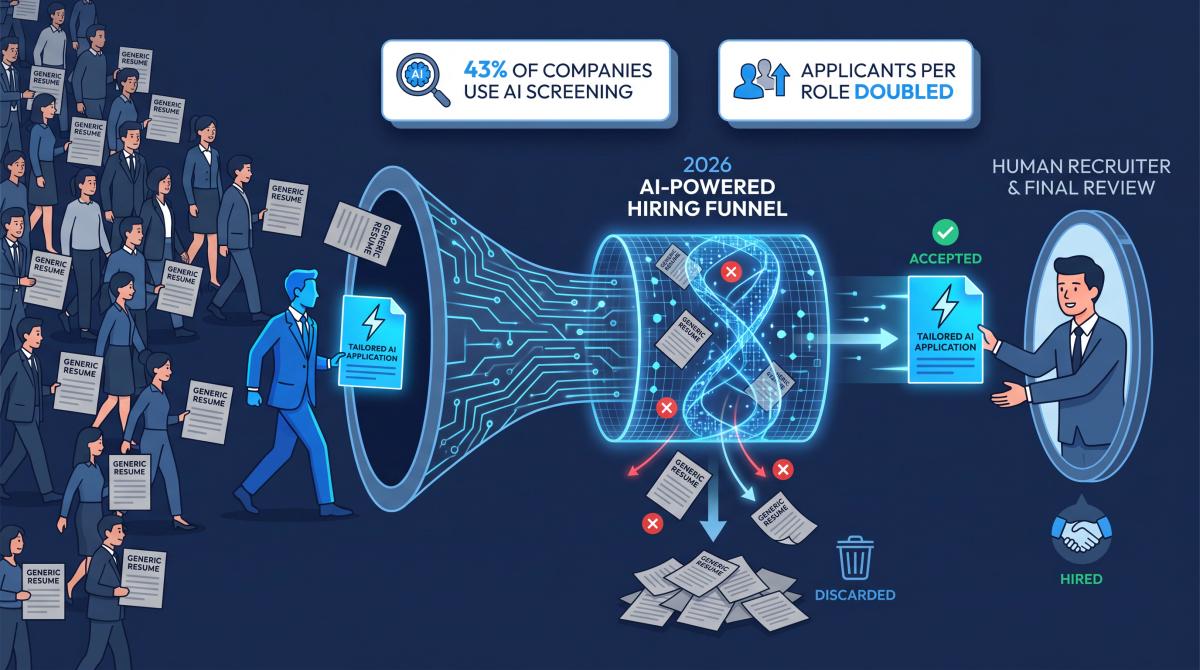
At AIApply, we built our whole platform around this exact workflow. You can scan a job description, generate a tailored resume, create a cover letter, and apply faster. Then prepare for interviews using our Mock Interview and real-time coaching with Interview Buddy. The goal isn't to replace your effort. It's to cut the repetitive formatting time so you can focus on what actually wins offers: targeting, proof, and interview performance.
A 30-day job search plan to apply at the right time
Knowing the best months is one thing. Having a system is another.
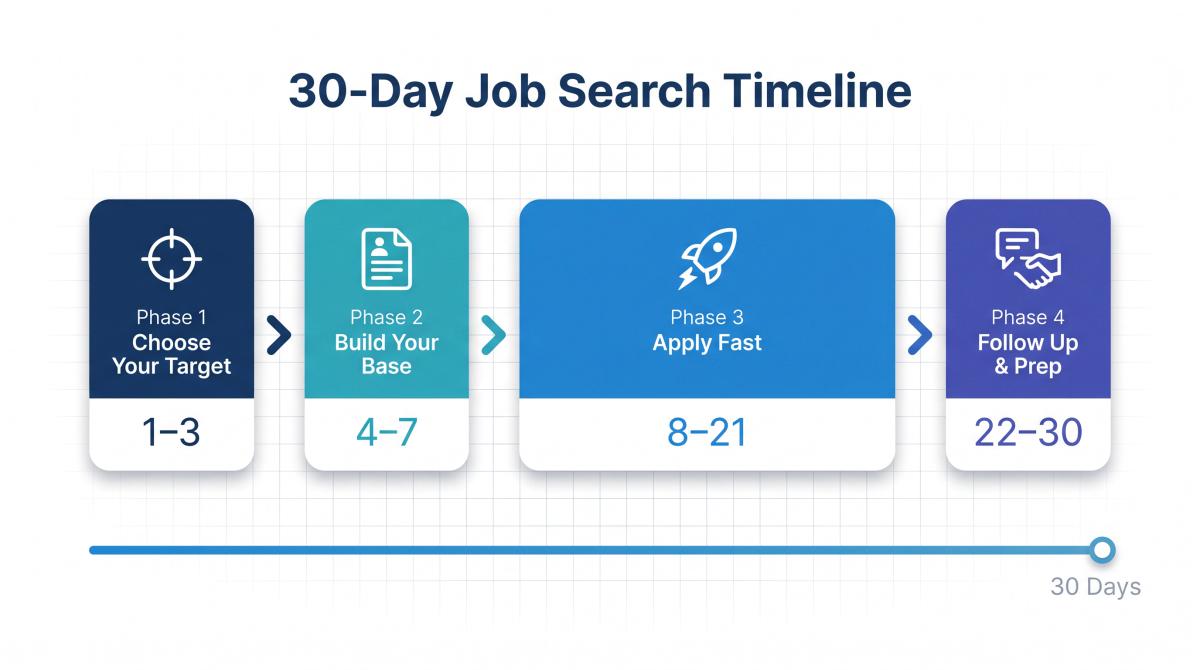
Days 1–3: choose your target
Don't begin with "I'll apply to everything." Before you touch your resume, decide:
- 2 to 3 target job titles
- 1 to 2 target industries
- Your preferred location or remote setup
- Salary range
- Dealbreakers
- 10 to 20 companies you actually want to work for
This focus makes your search sharper and your tailoring faster. A scattered search produces scattered results.
Days 4–7: build your application base
Create one master resume and at least one tailored version per role type. Build a cover letter base. Write out a list of your strongest achievements with specific numbers and outcomes.
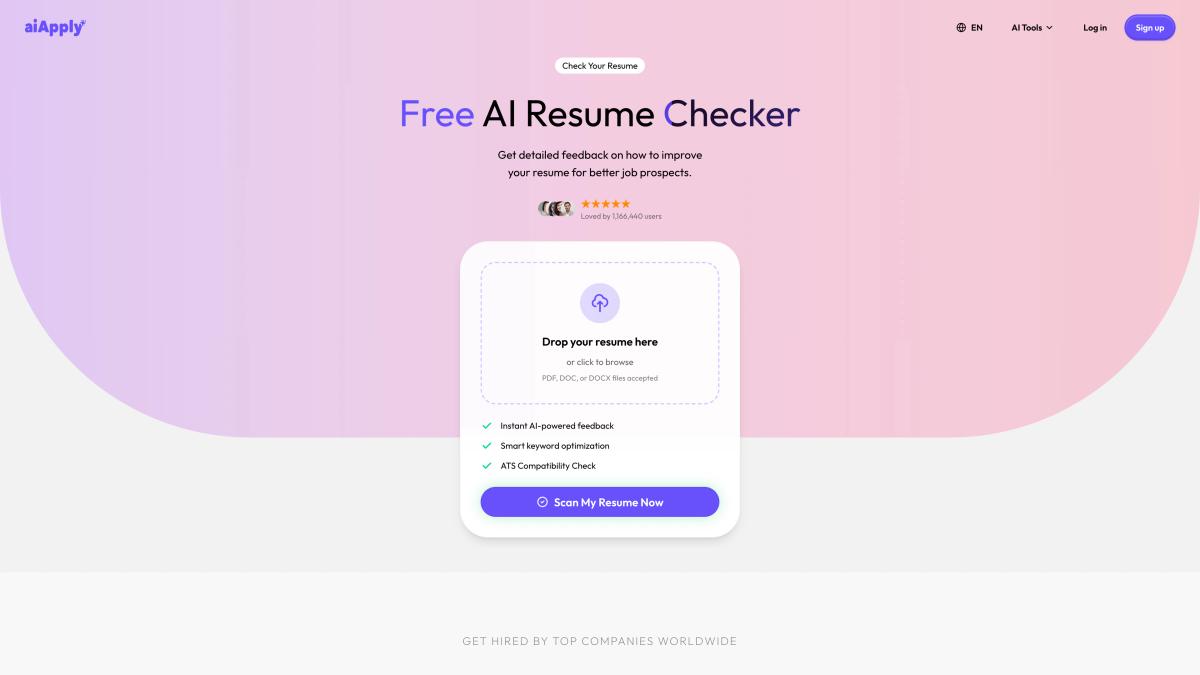
Before you send anything, run your resume through an ATS checker. Our free AI Resume Checker identifies ATS compatibility issues, keyword gaps, formatting problems, and specific improvements you can make before your applications go out. This step alone catches mistakes that silently kill applications.
Days 8–21: apply to fresh roles fast
This is the main sprint.
Each day, check your alerts and prioritize jobs posted in the last 24 to 72 hours. Tailor your resume to the job description. Generate or edit a job-specific cover letter. Apply. Track the application. Send a short networking message to a contact at the company when you have one.
Don't measure success only by number of applications. Measure the number of good-fit, fresh, tailored applications.
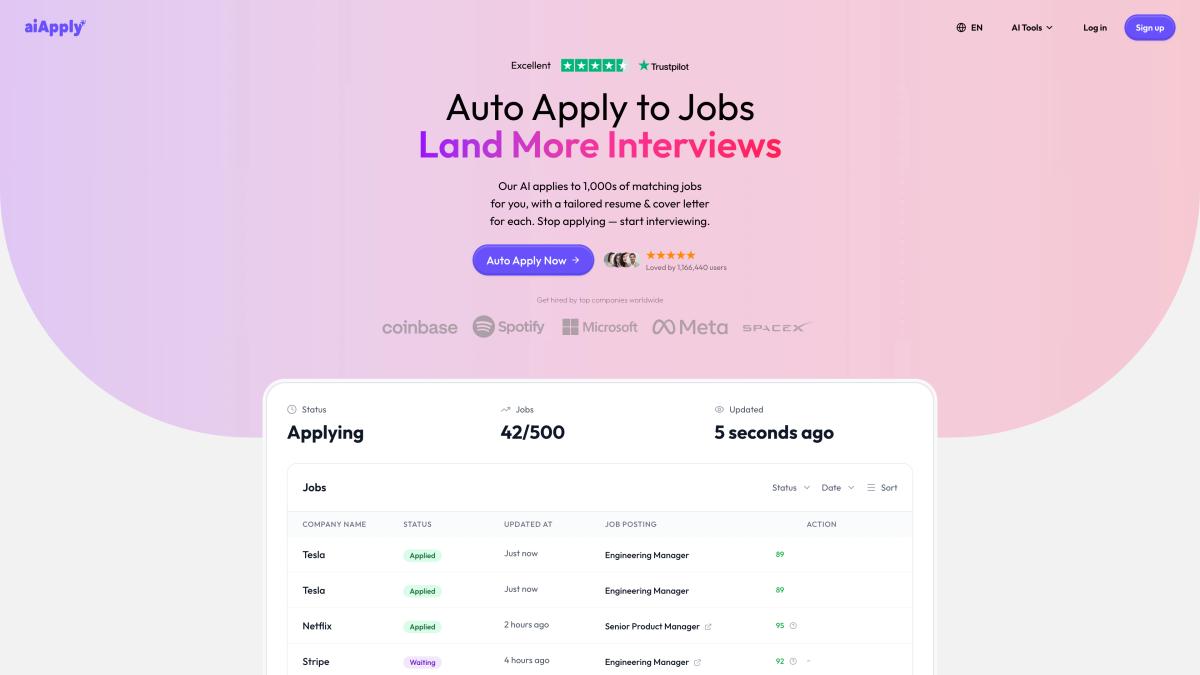
Our Auto Apply tool is designed to handle much of this volume: it scans job postings, matches roles to your preferences, optimizes your resume and cover letter for each job description, and submits tailored applications so you can focus your energy on the highest-fit roles and on networking.
Days 22–30: follow up and prepare for interviews
By week four, you should have applications in motion. Now prepare before interview invites arrive, not after.
Write out stories for your strongest achievements. Practice explaining any career gaps or pivots. Research target companies. Run mock interviews. Prepare your salary expectations.
Interview Buddy and our Mock Interview tool are built to help you practice with job-specific context: turning the job description into likely questions and giving you real-time feedback on your answers. Candidates who prepare before the invite tend to perform better than those scrambling to prep in 48 hours.
What to do if you missed the best hiring window
You didn't miss your chance. You just need to adjust the approach.
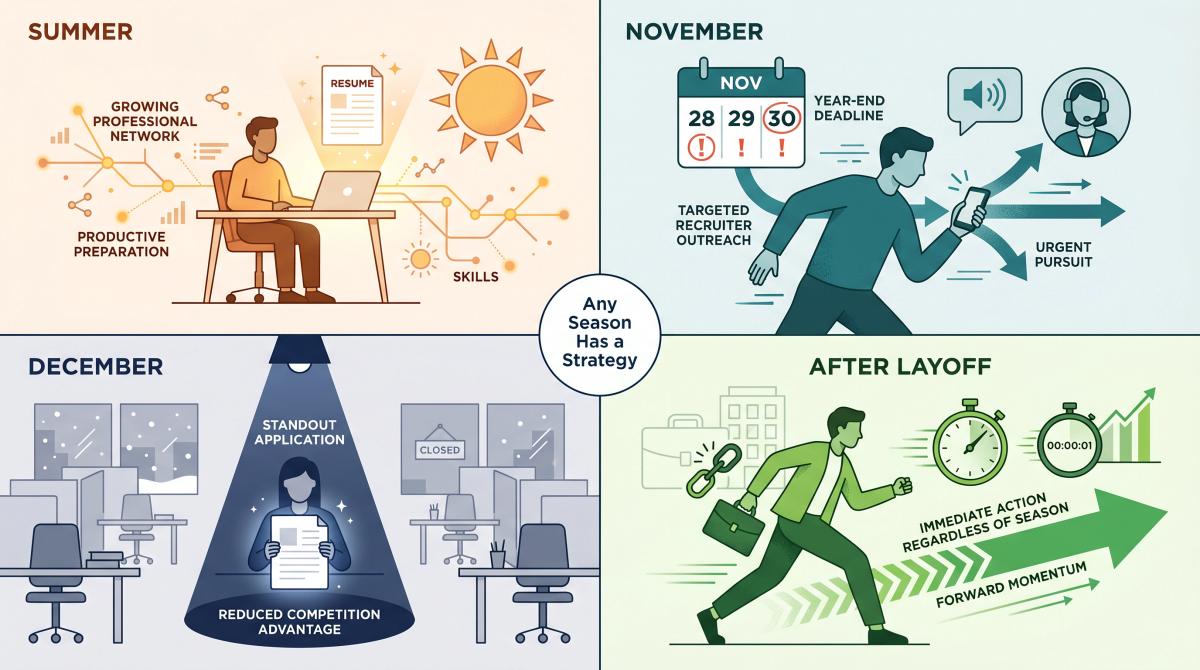
If it's summer: Apply to fresh roles, but expect slower scheduling. Use the extra time to sharpen your resume, improve your LinkedIn, and build connections at target companies. The candidates who make the strongest impression in September often spent July and August doing this quiet work.
If it's November: Target urgent roles specifically. Some companies are racing to fill budgeted roles before year-end. Combine applications with heavier networking and recruiter outreach.
If it's December: Apply selectively to fresh and time-sensitive roles. Network with people while other candidates have gone quiet. Use the month to prepare for a strong January start.
If it's right after a layoff: Apply immediately. Don't wait for a better month. Your best timing is the next fresh role that matches your background. Adjust strategy by season, but don't let the calendar be a reason to delay.
Six mistakes that quietly kill your timing strategy
Even in the best hiring windows, certain habits undermine your results. These are the ones we see most often.
1. Waiting for January.
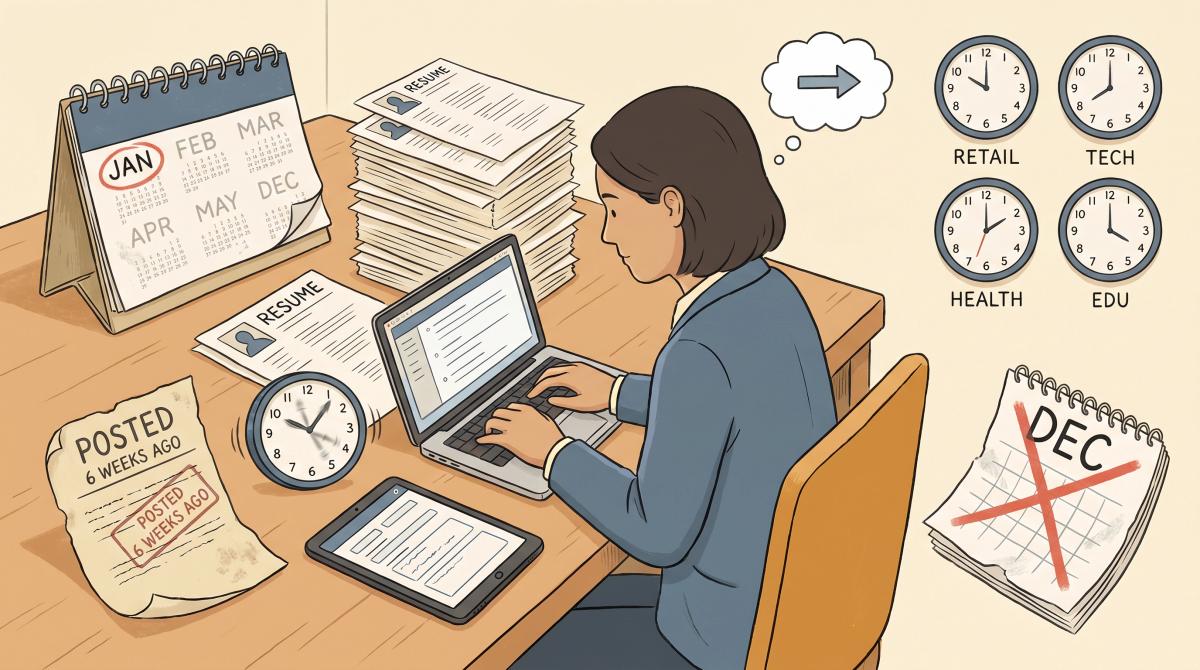
January is good, but it's not magic. April, May, September, and October can be just as strong or stronger depending on your market and industry.
2. Applying too late to old postings.
A role posted six weeks ago might still be open, but your odds are almost always better with fresh postings. Prioritize new roles first.
3. Using one generic resume all year.
Timing won't save a generic resume. If your resume doesn't match the job description, applying in the best month still won't change your results.
4. Ignoring industry cycles.
Retail, healthcare, education, finance, startups, and graduate schemes don't all hire on the same calendar. Treat each differently.
5. Stopping in December.
December is slower, not dead. Disappearing entirely means missing urgent roles and giving up the networking runway into January.
6. Choosing speed over fit.
Applying early only helps if the application is actually strong. A fast, weak application is still weak. Speed and quality have to travel together.
When should you actually apply?
The simplest version of everything above:
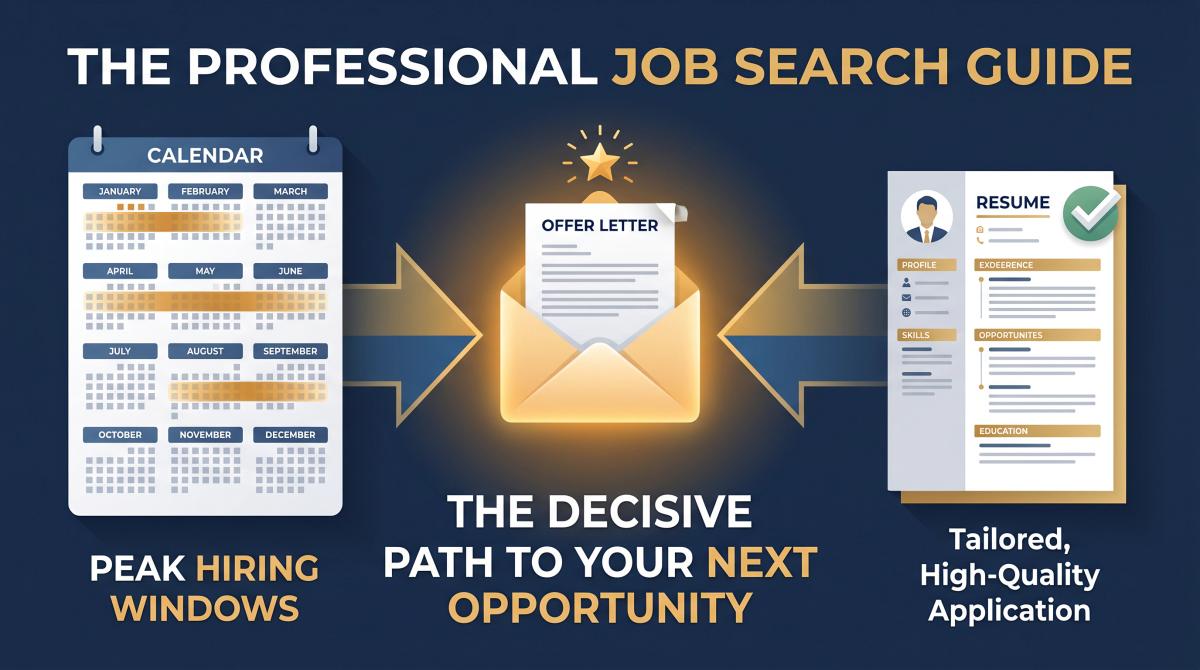
The best time of year to apply for most professional jobs is late January to February, April to June, and September to October. These are the windows when budget, urgency, recruiter availability, and posting volume align.
The best time to apply to a specific job is as soon as it's posted and you can submit a tailored application. Freshness within a posting matters more than the month on the calendar.
And if you're wondering where you fit right now:
- In a strong window? Move fast. Fresh applications with tailored resumes.
- In a slower period? Prepare, network, and target urgent roles.
- Unemployed? Apply now. Don't wait for the calendar.
- A student or recent grad? Start earlier than feels necessary, especially for competitive programs.
- Switching careers? Use the month before peak season to build a stronger story.
The job market rewards candidates who combine timing with readiness. The right month helps. The right application wins.
Frequently Asked Questions
What is the single best month to apply for jobs?
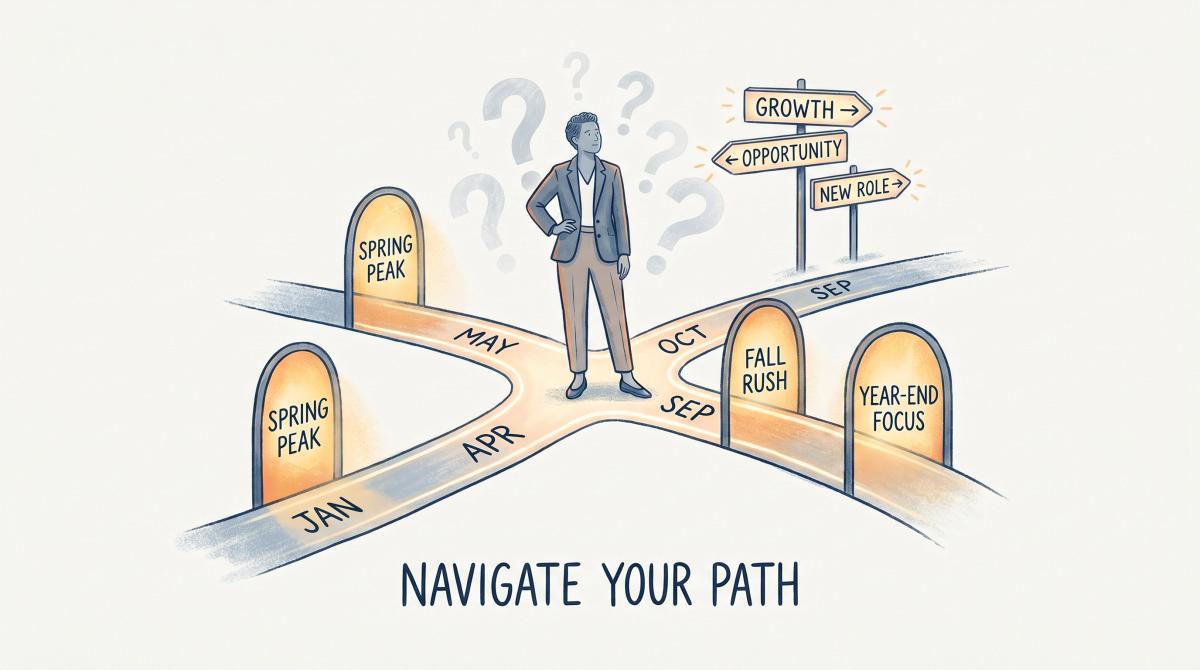
For many corporate and professional roles, February stands out because budgets are active and hiring teams are fully operational after the holiday break. But April, May, September, and October can be just as strong depending on your industry and market. LinkedIn's seasonality research found that job postings tend to peak from April through July, with May often the highest month across multiple countries. There isn't one universally best month. There are three windows, and all of them matter.
Is January always the best time to start a job search?
January is a good time to start preparing, but it's not always the strongest month for actual interviews and offers. Early January can be slow as teams return from the holidays. Late January and February tend to be stronger for actual movement. The idea that January is uniquely special is partly true (budgets reset) and partly overhyped.
Is December a bad time to apply for jobs?
December is the slowest month, but that doesn't make it useless. LinkedIn found that applications hit their lowest point in December and hiring activity drops sharply. The upside: you're competing against far fewer candidates. Urgent roles still exist, and some companies post in December specifically to kick off January hiring. Apply selectively to fresh and urgent roles, network actively, and use the month to prepare for a strong start to the new year.
Should I apply for jobs in summer?
Yes. June and July can still have solid posting volumes, though interview scheduling may slow as vacations pick up, especially in Europe. August is genuinely quieter in many markets, but it's ideal for preparation: updating your resume, building your target list, and positioning for September. Don't stop entirely during summer.
What's the best time to apply for graduate jobs?
It depends on your country and the type of role. In the UK, many graduate schemes open applications in September or October for positions starting the following summer, with rolling deadlines that can close as early as January. The National Careers Service and Prospects both advise applying earlier than feels natural.
In the US, spring recruiting has grown significantly. NACE's April 2026 spring update found that employers expected to hire 5.6% more graduates from the class of 2026, with 37% of full-time hires and 27% of intern hires coming from spring recruiting.
What's the best day of the week to apply for jobs?
Research suggests Tuesday mornings between 8 and 11am see the highest recruiter review activity, so if you're choosing between two equally polished applications going out at the same quality, Tuesday morning is a reasonable default. But don't build your whole strategy around it. The stronger principle is freshness: applying within the first 24 to 48 hours of a posting going live matters far more than the weekday. A strong application submitted within the first couple of days almost always beats a technically perfect one submitted two weeks later on a "good" day. If you can control one thing, make it speed and quality. Set alerts, check them daily, and apply when good roles appear, regardless of the day.
How soon after a job is posted should I apply?
Ideally within the first 24 to 72 hours, as long as you can submit a properly tailored application. Within the first week is still competitive. After two or more weeks, the role may already have a strong candidate pipeline, so prioritize fresher roles first.
Should I wait until the job market improves?
Generally, no. Hiring conditions vary significantly by industry, geography, and role type, and the market doesn't improve uniformly. If you need a job or genuinely want to move, apply now and use current market data to choose better targets. The 2026 market has real opportunities (6.9 million US job openings as of March 2026) even if competition is higher than it was a few years ago.
How far in advance should I start applying before I want to start working?
For most professional roles, start applying at least 2 to 3 months before your ideal start date. Hiring processes typically take 4 to 8 weeks from first application to offer. Use that window to prepare for interviews so you're ready the moment invites arrive. For graduate schemes, internships, fellowships, government programs, and academic roles, start much earlier, as deadlines can be six months to a year before the role actually begins.